When your child is managing a mental health condition, it comes with a lot of emotions. There’s powerlessness, frustration, concern, and confusion, just to name a few. What can you, as a parent, do to help? Why can’t you just take away the thoughts and feelings that are causing them so much pain?
Then there are the treatment options, and more decisions with no guarantee that the treatment you choose will be the one to help your teen.
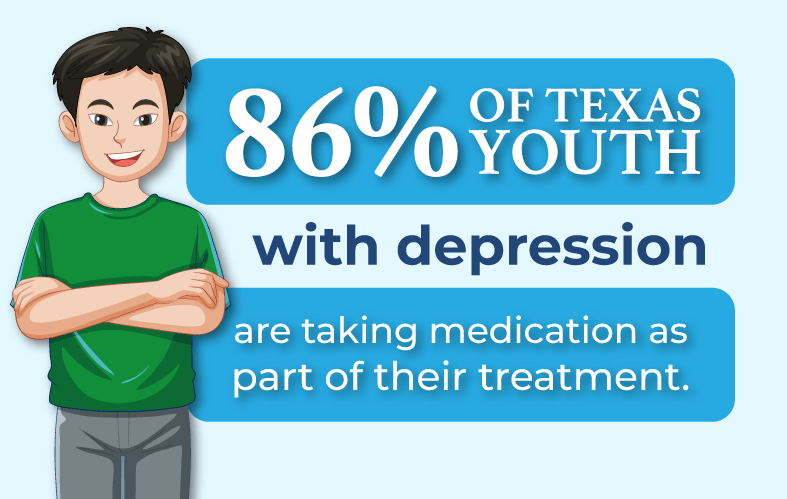
Among those options is medication. 86% of Texas youth with depression are taking medication as part of their treatment, according to one 2025 study. When you add anxiety, ADHD, and other conditions into the mix, a lot of kids are taking meds to help their mental health symptoms.
Despite this, there are still a lot of questions surrounding medication for teen mental health. Are we sure they’re safe? Do they really work? Why do they help some teens and not others? These are just a few common concerns parents bring to us at Bricolage, and chances are you’ve wondered the same thing.
Let’s answer some common questions, bust some myths, and dig into the information you need to know about medication for teen mental health.
This is one of the primary concerns parents have, so it’s important to answer out of the gate. The short answer is typically, yes.
Of course, everyone is different, and medications will have more negative side effects than benefits for some teens. But when parents ask this question, they usually have the FDA’s black box warning of increased suicide risk while on antidepressants in mind.
The FDA implemented this warning because there was enough data to show an increase in suicidal thoughts and ideation, but not suicide completion.
Other studies have shown that the differences in suicide risk in teens on antidepressants compared to those on placebo treatment are minimal. There will be teens who experience increased suicidal thoughts like in the studies the FDA cited, but current research suggests antidepressants decrease suicidal thoughts more often than not. The FDA’s warning wasn’t meant to scare parents out of letting their kids take antidepressants. It was meant to encourage parents and mental health professionals to watch out for signs of suicidality in youth taking these medications. When it comes to suicidal ideation, it’s always better to be safe than sorry, and any increase in suicide risk is worth noting!
We don’t have much longitudal data on how psychiatric medications effect teens yet, so it’s hard to say with 100% certainty that medications are or aren’t safe for teens long-term. However, we do have some research that suggests long-term medication use in teens can cause the following problems:
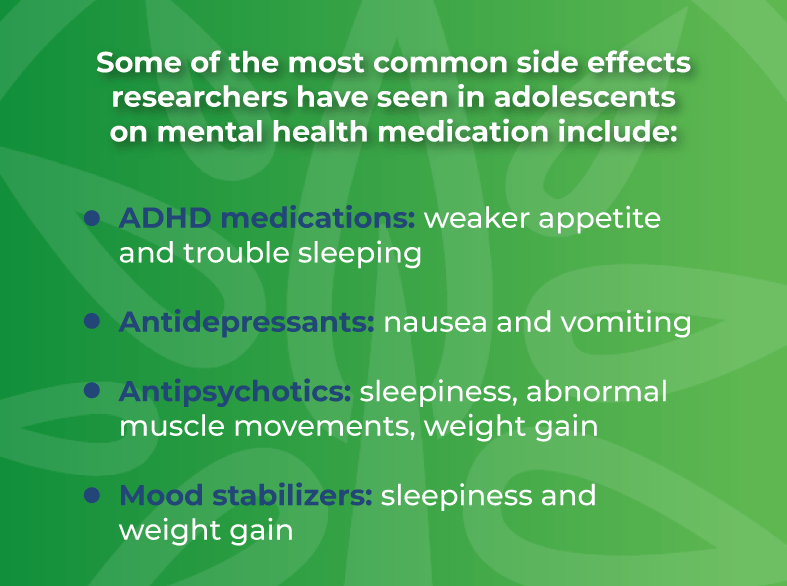
Some of the most common side effects researchers have seen in adolescents on mental health medication include:
If there are so many downsides to teens taking medication long-term, why should they ever start taking it? It’s a fair question, but medication definitely does have a place in some teens’ treatment plans. At Bricolage, we think of medication as more of a “kickstarter” than a long-term solution most of the time.
Therapy is where your teen will learn the skills and strategies they need to manage their mental health and circumstances, but if they don’t feel well, it can be hard to do the work that will lead to real change in their brains. If your teen is depressed, chances are they’ll feel too exhausted, or they’ll feel hopeless and doubt treatment will actually help. If they have unmanaged ADHD, they might “zone out” during therapy sessions and miss out on important information that can benefit them! These are situations where medication might help. At their best, medications are a “bridge” to therapy and other treatment that leads to lasting and healthy brain change – not just a way to manage symptoms.
If your teen does take medication for their mental health, it’s important to track their symptoms and keep in touch with the doctor who prescribed their medication. Be sure to ask them any questions you have, and let them know if you have any concerns.
Medication is intimidating for many families. Bricolage’s goal isn’t to convince you that medication is “good” or “bad,” but to equip you with the knowledge you need to make the best choice for your teen’s mental health. A key part of that is addressing some common beliefs and misconceptions about psychiatric medication. What’s true and what isn’t? Check out our chart below.
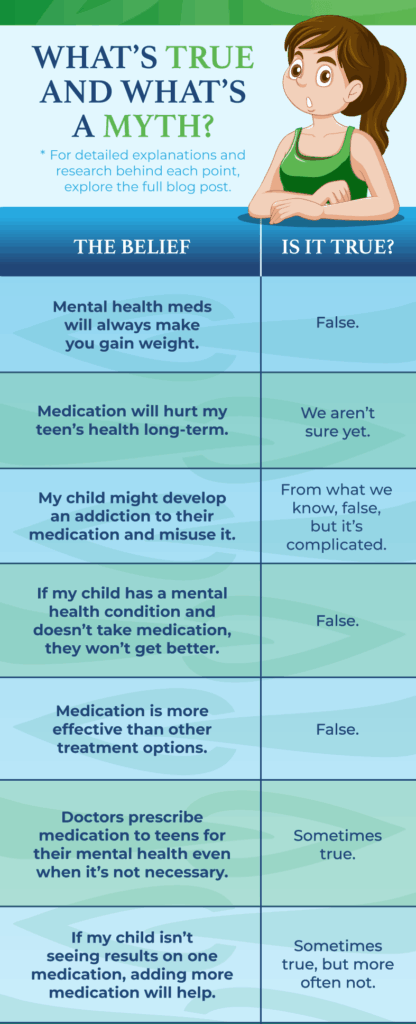
| The Belief | Is It True? | What the Research Says |
|---|---|---|
| Mental health meds will always make you gain weight. | False. | It depends on each person and the medication itself. Weight gain is seen most frequently with antipsychotics, with up to 60% of youth on them gaining weight. SNRI antidepressants tend to cause weight loss in teens more often. It’s also hard to tell what weight gain is due to appetite changes caused by medications as opposed to actual metabolic changes due to the medication, especially because teens are still growing! |
| Medication will hurt my teen’s health long-term. | We aren’t sure yet. | Long-term research on the impact of mental health medication for teens is lacking. However, if your teen’s symptoms are limiting their potential to live a happy life and medication helps, it’s probably well worth it. |
| My child might develop an addiction to their medication and misuse it. | From what we know, false, but it’s complicated. | In the vast majority of cases, treatment of mental health conditions during youth actually lowers the risk of substance use disorders later in life. This is especially true for ADHD, despite stimulant medications’ warnings for potential misuse. However, there is evidence that suggests teens can develop a physical dependence on their medications. This isn’t the same as an addiction, but it can make getting off medications painful and difficult when teens take them for a long time. |
| If my child has a mental health condition and doesn’t take medication, they won’t get better. | False. | There are so many treatment options outside of medication that could help your teen. Cognitive behavioral therapy alone can be very helpful. If your teen is on medication and doesn’t put in the work to create thought and behavioral change in therapy, then they’ll revert back to old habits and symptoms once they’re off the medication. That’s why therapy is so important! |
| Medication is more effective than other treatment options. | False. | Medication can cause side effects or have no effect for some teens, while types of talk therapy typically have some success. Research shows the most effective treatment combines medication and therapy. |
| Doctors prescribe medication to teens for their mental health even when it’s not necessary. | Sometimes true. | It’s hard to really confirm when medications are or aren’t necessary through research, because there’s no scientific standard for when medications are “necessary” or not. It’s subjective. That being said, prescription rates of mental health medications have increased significantly following the pandemic. We know adolescent mental health has worsened since 2020 also, so that’s not necessarily an indication of over-prescription. However, anecdotal evidence suggests some mental health professionals default to medication even when different treatment might be better. |
| If my child isn’t seeing results on one medication, adding more medication will help. | Sometimes true, but more often not. | Medication is unfortunately a bit of a trial-and-error process. This means some medications might work, some might not, and it’ll take time to find the right balance for your teen. That doesn’t mean that adding more medication is always the answer. Evidence shows teens on multiple psychiatric medications experience more and worse side effects, so sometimes it does more harm than good. It will be different for everyone, and it’s important to discuss all medications with your teen’s psychiatrist. |
The most important thing to do when your child is experiencing mental health difficulties is to consult with a mental health professional. They will be able to guide you on when or what medication might be appropriate for your teen’s situation better than any advice online. That being said, even mental health experts have varying opinions on what calls for medication and what doesn’t. As we covered in the section above, they might recommend mental health medication when your teen would better benefit from another treatment option – or they could be hesitant to prescribe medication when it could really help. Since the 70s, the default of many doctors and psychiatrists in the United States has been a medication-first strategy. Here at Bricolage, our philosophy is the opposite approach. Since no research has ever discovered a biomedical marker for any behavioral health condition, the common-sense conclusion is that mental health conditions arise out of personal life experience, not biological “defects.” Our emphasis is on behavioral therapy, with medication only being a supplement as needed.
The chart below includes some examples of when medication could be beneficial and when it probably isn’t necessary.
| When Medication Could Help | When Medication Might Not Be a Good Fit |
|---|---|
| Your teen is living with severe symptoms that are significantly interfering in their lifeYour teen is having trouble focusing and it’s hurting their gradesYour teen is having suicidal ideation or has attempted suicideYour teen is experiencing hallucinations or other signs of psychosisYour teen is having manic episodesYou are worried for your teen’s safety and believe it’s urgent that their mental health improvesYou’ve tried intensive therapy alone and your teen’s mental health hasn’t improved | Your teen is managing their responsibilities effectively despite their symptomsThey don’t experience their symptoms all the timeThey seem like they would benefit most from talking through their concerns with someoneThey’ve tried medication and have experienced negative side effects or have not seen resultsThey’re seeing positive results from treatment other than medicationThey haven’t tried therapy as the first line of defense |
Remember, medication isn’t going anywhere. If you try therapy and don’t see results, it’s always an option. In most cases, it’s worth exploring other treatments before jumping to medication. If nothing on the “When Medication Could Help” side of the chart applies to your teen, but their doctor is still eager to prescribe medication before trying therapy, it might be a good idea to get a second opinion.
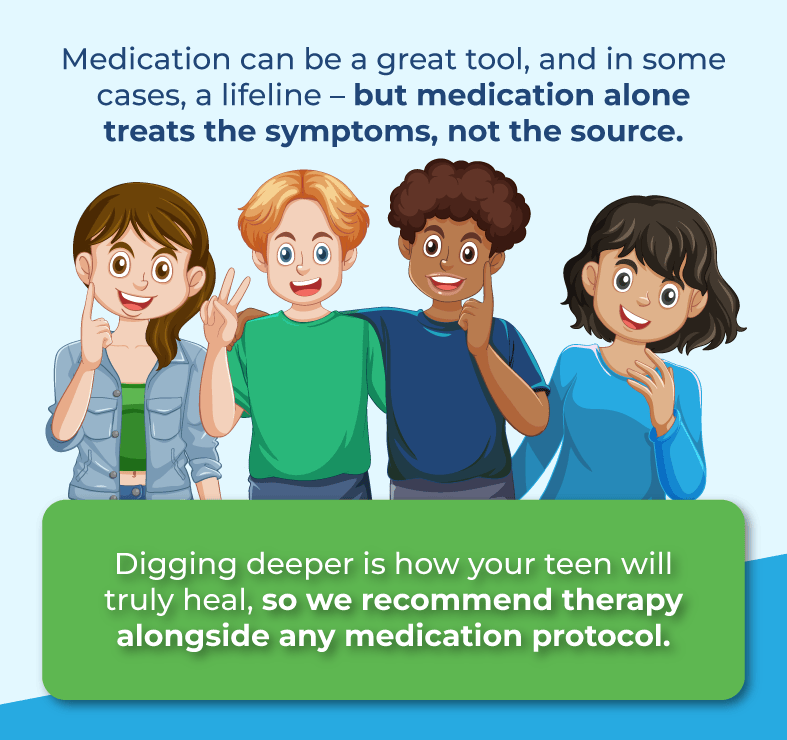
It’s most important to get to the source of your teen’s mental health concerns. Medication can be a great tool, and in some cases, a lifeline – but medication alone treats the symptoms, not the source. Digging deeper is how your teen will truly heal, so we recommend therapy alongside any medication protocol. Evidence shows that combining therapy and medication helps teens the most, too.
Medications can be hit or miss. Some psychiatrists emphasize “getting the diagnosis right,” while others emphasize “getting the meds right.” At Bricolage, we don’t take either of those approaches. Many of our kids come in with constantly shifting diagnoses. First, they were diagnosed with ADHD, then it was ODD, then it was ODD with a mild autism diagnosis. Because there are no biological tests to identify a mental health condition, mental health professionals rely on the Diagnostic and Statistical Manual of Mental Disorders (DSM). All the DSM does is identify clusters of symptoms and put a name to them. Frustratingly, many of these symptom clusters overlap, making diagnosis difficult and confusing.
At Bricolage, we’re not overly interested in the diagnosis – we’re interested in what’s causing the thoughts, feelings, and behaviors that might lead to a diagnosis. If your child feels anxious all the time, receiving a diagnosis of an anxiety disorder doesn’t actually help them get better. We need to understand why they feel anxious all the time. Once we understand why, we can implement the therapy methods that will provide them with the skills they need to recover and succeed.
Trying mental health medication and not seeing results can be discouraging. Know if this applies to your family, you aren’t alone. Research indicates that around 30% of teens with major depressive disorder don’t respond well to medication. Thankfully, medication is not the only path to recovery from mental health conditions. You have a lot of other options!
Don’t be afraid to talk to your doctor about different therapy options your teen could try. Cognitive behavioral therapy (CBT) is a common and effective course of treatment for most mental health conditions, but there are additional options tailored to help with different symptoms and diagnoses.
It’ll take some time and patience to find the right therapist for your teen. Keep in mind that this is your teen’s therapist, so their opinion on them is most important, even though yours matters too! A good therapist will put in the work it takes to earn your teen’s trust, understand them deeply, and help them achieve their goals. They’ll also be eager to find the origin of your teen’s mental health symptoms and empower them to regain full control of their mind. When you find a therapist who fits this bill, they’re a keeper.
Your child’s mental health condition is treatable, and healing is possible. Whether medication ends up part of their treatment plan or not, the first step is contacting a mental health professional. They’ll work with your family to find the right path forward for your teen. With hard work and dedication, your teen won’t just take medication to manage their symptoms – they’ll conquer them and thrive.
Bricolage Behavioral Health provides teen mental health services in Flower Mound, Texas. We’d love to help your teen overcome the mental health obstacles preventing them from living life to the fullest. That can involve medication, but it doesn’t have to. We offer several therapeutic options, such as our unique whole-group therapy, that are just as effective. Your teen’s brain isn’t broken beyond repair. We just need to work together to build healthier habits and thought patterns so they can retake control of their mental health. Ready to get started? Call 469-968-5700 today.
Bricolage Behavioral Health: Where Teen Minds Matter

Bricolage Behavioral Health is strength-based, skills-based, evidence-based, and medication-light. We empower your child or teen to develop the skills they need to take control of their mental health with effective, science-backed therapy.
At Bricolage Behavioral Health we believe that whole family healing affords your child the best chance for long term mental health and can put your loved ones on the path to a healthier, happier life.
Bricolage Behavioral Health
3204 Long Prairie Road
Suite A
Flower Mound, TX 75022
Mon - Fri: 8:30 AM–9:00 PM
Sat & Sun: 9:00 AM–5:00 PM