“If we want to help our children manage anxiety, we need to celebrate their bravery, not just their success.
- Krysten Taprell
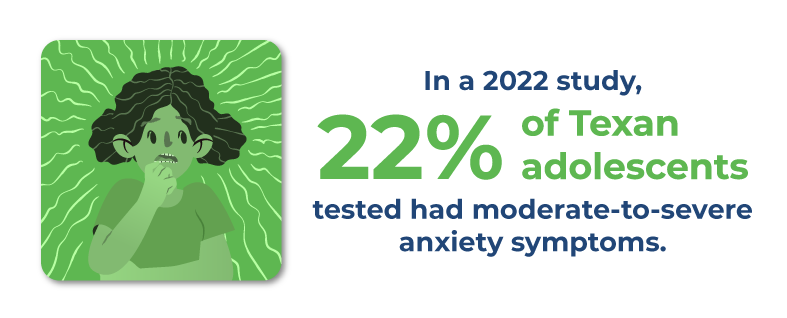
When anxiety impacts your teen’s life, it is heartbreaking to see them face the challenges that it brings. You might feel powerless in how you can help them. You are not alone in this experience. In a 2022 study, 22% of Texan adolescents tested had moderate-to-severe anxiety symptoms. This staggering number reflects how anxiety impacts many families throughout the state.
At Bricolage Behavioral Health, we understand how deeply you care for your teen, and we are here to offer a safe, nurturing space where your teen will find relief and healing through compassionate, evidence-based care. Together, through teen anxiety treatment, we will empower your teen to overcome anxiety and rediscover hope, confidence, and peace.
Anxiety impacts the lives of teenagers in our community to the point that many of them might not enjoy life. In the United States, approximately 15.3% of kids aged 12 to 17 are diagnosed with an anxiety disorder.
It is typical for teens to feel anxiety or worry from time to time because these emotions are a natural part of being human. However, when these feelings interfere with daily life, it could be a sign of an anxiety disorder. When they begin to avoid school, withdraw from friends, or hesitate to engage in conversations, you might feel like they are missing out on some of life’s most important moments. This can be hard to witness as a parent, but you and your teen are not alone. Treatment will guide your teen toward a brighter, more confident future.
We enable teens to find enjoyment, security, and relief from the often complicated emotions they have associated with their anxiety disorder. Teens who attend anxiety treatment find a higher quality of life and more freedom to reach the goals they have for themselves. Through anxiety treatment for teens at Bricolage Behavioral Health, your teen will learn the skills and confidence to be able to manage this mental health condition in a supportive and compassionate environment.
At Bricolage Behavioral Health, we utilize whole-group therapy to treat anxiety disorders. This differs from other places, which rely on a round-robin approach to group therapies. During round-robin-style group sessions, teens are addressed individually while the others must listen passively. That often means they are not actually listening and don’t learn from their peers.
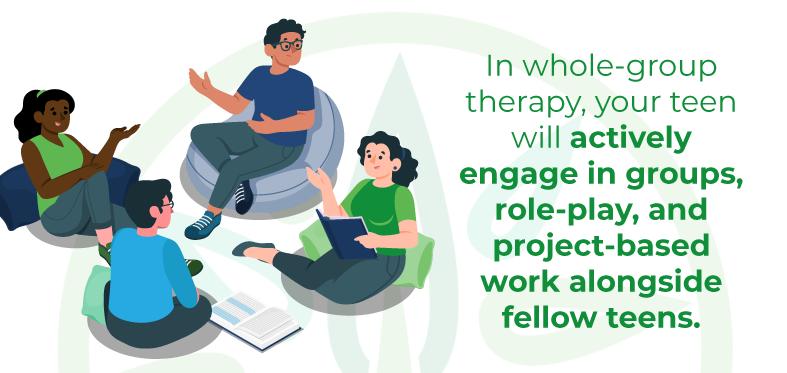
In whole-group therapy, your teen will actively engage in groups, role-play, and project-based work alongside fellow teens. This allows them to better connect with their peers while providing the skills they need to reduce their anxiety symptoms. They are more actively engaged in their treatment because, through these activities, they will form connections and communicate with their peers experiencing similar concerns. They can learn and grow alongside others because they are actively involved throughout the session.
We treat anxiety in teens through 2 programs: day treatment and outpatient treatment. We understand how terrifying it can feel to know that your child has anxiety, but each teen with this condition experiences it differently. Our expert team will work with you and your child to determine which level of care will best suit their needs and provide them with the most advantageous chance of recovery.
Day treatment (partial hospitalization) is an excellent option for teens who require additional assistance with their anxiety disorder. A teen in need of further assistance might experience symptoms that significantly impact their ability to function, need a structure-focused approach to care, or have thoughts of suicide or self-harm as a result of their condition but are not an immediate danger to themselves or others.
In day treatment, your teen will be at our facility for several hours, 5 days a week, actively participating in group and individual therapies and schooling requirements. These therapies will focus on your child's strengths and give them the tools they need to accomplish their personal goals. Keep in mind that your child's aspirations might not directly involve healing from anxiety. Instead, we meet your child where they are and work with them to achieve their goals, with the secondary goal being anxiety recovery.
In addition to this, we require family therapy sessions as part of our day treatment program. This allows us to communicate with you about your child's progress regularly and to teach you how you can continue to support your child's recovery after they have left our facility.
For teens who don't require intensive care when it comes to their anxiety management, outpatient treatment is a great alternative. Your child can still maintain their responsibilities and keep up with their schooling while attending treatment.
At this level, your teen will participate in individual and group therapy sessions designed to build their strengths and help them regain self-love. If they leave a day treatment program, it can also help your child build upon their anxiety management journey. While family therapy is not required during outpatient treatment, we will remain in regular contact with you about your child's progress.
Teens are prone to several types of anxiety disorders, and each comes with its own unique set of challenges. It is important to remember that each teen’s experience is personal, and they might not fit neatly into one category. With that said, no matter what symptoms they are experiencing, receiving understanding and support through treatment will help them find recovery. Below are some of the most common types.
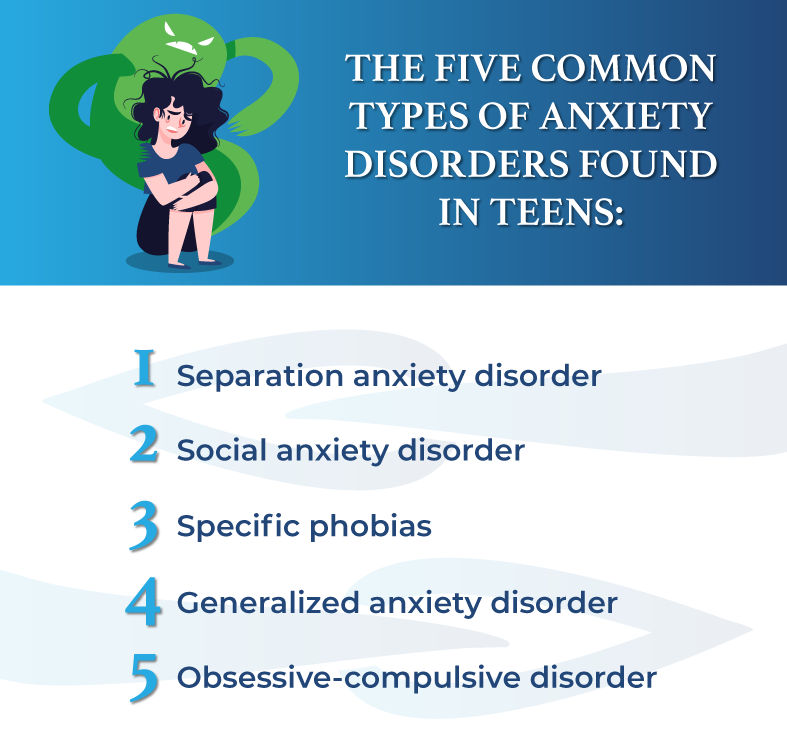
Separation anxiety disorder – Adolescents with this condition fear losing someone or something that they are attached to either physically or due to an event like being kidnapped or getting lost. Typical symptoms might include following the person around the house, refusing to be in a separate room, and avoiding places like school, camp, extracurricular activities, etc., that require them to be separated from the person or object they are attached to.
Social anxiety disorder – Adolescents with this condition often fear embarrassment or humiliation in circumstances that involve performing for or communicating with other people. Your teen with this condition might avoid eye contact, not want to talk on the phone, e-mail, or text people, avoid raising their hand or speaking in class, and will not initiate conversations with peers or others who might judge them.
Specific phobias – Adolescents might have a particular phobia about anything. They will have intense fear around that object or situation outside of the “rational” norm for fear regarding that thing. Some of the most common phobias include specific animals, needles, storms, or public transportation, such as buses or planes.
Generalized anxiety disorder – Adolescents can also have a general feeling of fear and dread typically associated with a view of unpredictability and uncontrollability in life. This can relate to their school performance, physical health, family and friend concerns, or various topics. They will often have symptoms that include constant fatigue, sleep concerns, restlessness, and being unable to focus due to their fears and worries.
Obsessive-compulsive disorder – Adolescents living with this condition experience intrusive and unwanted thoughts, known as obsessions, that can create feelings of fear. They will also have specific urges, known as compulsions, that they will feel like they need to do to satisfy their obsessions temporarily. It might include concerns about germs, repeated handwashing, reorganization of objects, or compulsive counting.
Even though different anxiety disorders can present themselves in unique ways, there are typically many symptoms that are the same across them all. Knowing what these symptoms are and being aware of them in your child assists you in understanding when they might benefit from anxiety treatment. While these symptoms might seem scary to read, they are vital signs your child needs help. If you see these signs in your teen, know there is hope, and they don’t have to experience them for the rest of their lives. Through anxiety treatment, your teen will learn how to manage and overcome their symptoms and create a more fulfilling and less anxious future.

Anxiety attacks can be subjective and refer to the physical symptoms of anxiety in general. Those could include feeling lightheaded or dizziness, restlessness, diarrhea, sweating, or an irregular heartbeat, to name a few.
A panic attack, on the other hand, is much more intense and overwhelming, and it can happen without warning. Your teen might feel completely calm one moment, only to be suddenly overcome by a sense of impending doom. While a panic attack is frightening, symptoms usually subside within an hour. By learning the right coping strategies with support and guidance, your teen will manage these moments and reduce the time they last.
Anxiety in teens can happen for a variety of reasons and are often a combination of multiple factors. These factors could be biological, such as someone in the family having anxiety. It also tends to be more common in girls than boys. That doesn't mean that boys can't have anxiety or that your teen couldn’t be the first in the family with this condition.
Environmental factors can also play a significant role in your teen’s anxiety. Stressful life events, challenges at school, sudden changes in their routine, or responsibilities beyond what is typical for their age overwhelm many adolescents. Bullying can profoundly impact your child’s sense of safety and self-worth. It is painful to watch your teen navigate these elements, but remember you and them do not have to go through these alone.
In addition to in-person environmental factors, your teens’ exposure to social media and other online sources also contributes to the development of anxiety in many people. While some teens might find it to be a positive experience where they can engage with their friends and peers, others might find it isolating and anxiety-inducing. This is true if they’re experiencing bullying or comparing themselves to others on the platforms. Helping your child understand safe practices online and encouraging them to tell a trusted adult about concerning things they see some ways can reduce the chances your teen will develop anxiety. You can also limit how much time they spend on those sites.
If your teen has already developed anxiety as a result of any of the factors mentioned above, know that it is still possible for your teen to live a healthier, more fulfilling life. Your child having anxiety is not a sign that you have failed as a parent or that you have let your teen down, even if other people are saying those things to you. This condition is not a permanent experience for your child. With proper treatment and understanding, anxiety can be properly managed.
If you suspect that your child might have an anxiety disorder, you must discuss these concerns with your teen and their doctor or mental health therapist. Only a medical professional can diagnose your teen with an anxiety disorder, and they will be able to assist your teen in the next steps to finding a better way to manage their condition.
In order to diagnose your teen, they will have your teen complete an assessment to determine their symptoms and compare them to the criteria in the Diagnostic and Statistical Manual of Mental Disorders, 5th Edition (DSM-5), such as this one on separation anxiety disorder in children. While this might feel overwhelming and terrifying to know about your child, having an official diagnosis is a good thing. It simply means your child is closer to healing from this condition.
Your teen does not have to try and manage their anxiety disorder on their own, and as a parent, you don’t need to carry their anxiety by yourself, either. Through a combination of individual, group, and family therapies, your child will gain the skills and support they need to live a less stressful life and be motivated to become the person they feel they’re meant to be. To schedule your teen’s first appointment, contact us today.
Bricolage Behavioral Health is located in Flower Mound, TX. Every child attending treatment at our facility has strengths that can help them find healing. We empower them to discover what those are and how they can develop them to build up the other areas of themselves. For more information, contact us today at 469-968-5700.
Bricolage Behavioral Health: Where Teen Minds Matter

Bricolage Behavioral Health is strength-based, skills-based, evidence-based, and medication-light. We empower clients to develop the skills they need to take control of their mental health with effective, science-backed therapy.
At Bricolage Behavioral Health we believe that whole family healing affords your child the best chance for long term mental health and can put your loved ones on the path to a healthier, happier life.
Bricolage Behavioral Health
3204 Long Prairie Road
Suite A
Flower Mound, TX 75022
Mon - Fri: 8:30 AM–9:00 PM
Sat & Sun: 9:00 AM–5:00 PM