
Car accidents. War. Natural disasters. Assault. Sudden death of a loved one.
These are all significantly traumatic events, and often what people think of most when they hear the word “trauma.”
People usually don’t associate kids with trauma and PTSD. Unfortunately, more than 2 out of 3 children experience trauma by age 16, and as many as 11% of them develop PTSD. It can have a debilitating effect on young people’s lives.
It doesn’t have to. Thankfully, trauma and PTSD treatment is available to help teens heal from the mental health symptoms chipping away at their quality of life.
Trauma is the result of an extremely frightening or life-threatening experience. As you can tell from our previous statistics, not everyone with trauma develops PTSD.
Traumatic events that lead to PTSD vary, and something that causes PTSD in one child might not in another. Why is this the case?
Current evidence suggests children are more likely to develop PTSD if the trauma is violent, they lack familial support after the trauma, or they are close to the traumatic event. The more trauma a young person experiences, the more likely they are to develop PTSD.
That doesn’t mean trauma that doesn’t qualify as PTSD is insignificant. These traumas can also be very damaging to a teen’s mental health, especially if they build up over time.
Our methods at Bricolage Behavioral Health equip kids with the skills they need to regain control over their memories and emotions, no matter what they’ve experienced.
In some ways, the word “trauma” is used so widely these days that it’s almost lost its meaning – or at least lessened the intensity of what we know as trauma.
Some people will call a breakup traumatic. You could call a teen moving schools traumatic, too, and a terrible experience with a teacher could also be traumatic in today’s meaning of the word. Do these experiences really count as trauma? Yes! It’s just not the same type of trauma as what people with PTSD experience. These are all examples of what we call “little t” trauma.
“Little t” trauma can still have a significant impact on kids’ mental health, especially if they go through a lot of it. The stress of those events adds up and takes a toll.
“Big T” trauma, on the other hand, is one life-threatening, terrifying event. These are the instances of trauma people with PTSD have, and they activate a “fight or flight” response when reminded of the event. People with “little t” trauma can still be triggered in that a reminder of one of their bad experiences can make them feel bad. It just doesn’t incite the same (seemingly) uncontrollable terror as “big T” trauma.
Let’s be clear: while “big T” trauma is more intense and emotionally scarring, it doesn’t invalidate “little t” trauma. Those experiences and the pain they cause are still very real. Chances are, teens will need help working through “little t” trauma in therapy, too.
Both types of trauma matter, and both can be improved with treatment.

The common phrase, “Time heals all wounds,” might apply in some cases, but that’s not the approach we want to take when it comes to trauma. Waiting to address trauma results in significantly more pain than healing, especially if you leave a child to work through it all alone.
The best time to start the healing process is as soon as possible. We’re happy to help teens whose trauma happened years ago or mere days ago. There’s no such thing as “too soon” to get started.
It does matter how you start, though. First, the kids at Bricolage learn techniques to manage their emotions and calm themselves down. Then, we carefully have them recall their traumatic memories and practice these strategies. As you can imagine, this is not fun or easy, but it’s a worthwhile process. The more the child recalls the traumatic memory and successfully stays calm, the less emotionally intense that memory becomes. With enough practice, they’ll eliminate the trauma response.
Of course, trauma isn’t just about a single memory. It can significantly interfere with a teen’s thought processes and worldviews. We address that at Bricolage, too. Some thought processes can be corrected through slow exposure to triggers, which trains the teen’s brain that not every reminder of the traumatic event is a sign of something dangerous. Opinions of the world shaped by trauma require more focus on restructuring thoughts, but we also work on that at Bricolage.
Whether it’s through our unique whole-group therapy, individual sessions, or family therapy – we help your child heal.
To make sense of this, we have to take a closer look at the “fight or flight” response. Your brain sends you into this mode as a means to protect you in dangerous situations. Your brain’s top priority is always to keep you alive – and it does a pretty good job of that! If you experience an extremely frightening or life-threatening event, your brain adapts to protect you from going through something like it again.
This is how people with PTSD are triggered by things that seem harmless to other people. For example, if a teen lives through a school shooting, that is an incredibly traumatizing and life-threatening event. Their brain will then likely associate certain sights, smells, and sounds with that event and take them as a sign that a similar event is about to happen. Loud noises that resemble gunfire, like fireworks, will likely send this teen into fight or flight mode. Their brain is just trying to protect them.
This perspective offers better context for us as we treat teens with PTSD at Bricolage Behavioral Health and for anyone whose loved one is experiencing it. It helps us to understand and be more compassionate toward people with a condition that is often misunderstood – especially in children.
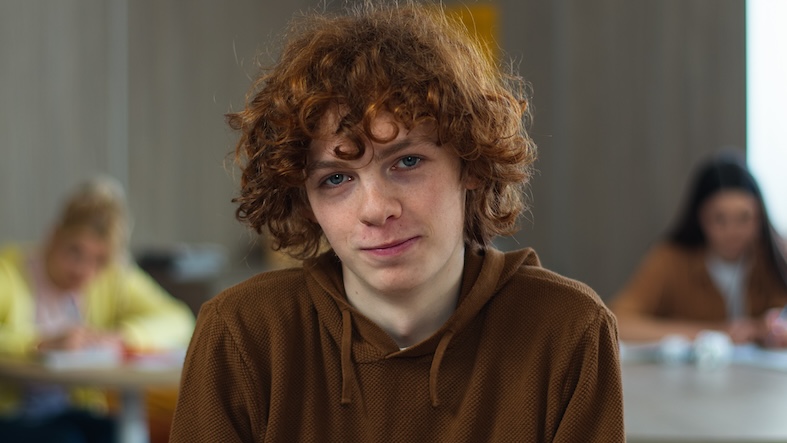
As a parent, you don’t want your child to go through anything painful, let alone be haunted by their bad experiences. Of course, it’s impossible to protect kids from every pain in life – but they can heal from trauma. We can help.
At Bricolage Behavioral Health, we serve young people and their families every day. We’ve pioneered whole-group therapy – a unique, engaging form of group therapy unlike anything else in the country. This method is effective in reducing the effects of trauma and combating mental health symptoms – and also empowers kids to build relationships and skills they can take with them out into the world. For more on what we do, call 469-968-5700 today.
Bricolage Behavioral Health: Where Teen Minds Matter
Bricolage Behavioral Health is strength-based, skills-based, evidence-based, and medication-light. We empower clients to develop the skills they need to take control of their mental health with effective, science-backed therapy.
At Bricolage Behavioral Health we believe that whole family healing affords your child the best chance for long term mental health and can put your loved ones on the path to a healthier, happier life.
Bricolage Behavioral Health
3204 Long Prairie Road
Suite A
Flower Mound, TX 75022
Mon - Fri: 8:30 AM–9:00 PM
Sat & Sun: 9:00 AM–5:00 PM