“Depression doesn’t take away your talents – it just makes them harder to find.”
- Lady Gaga
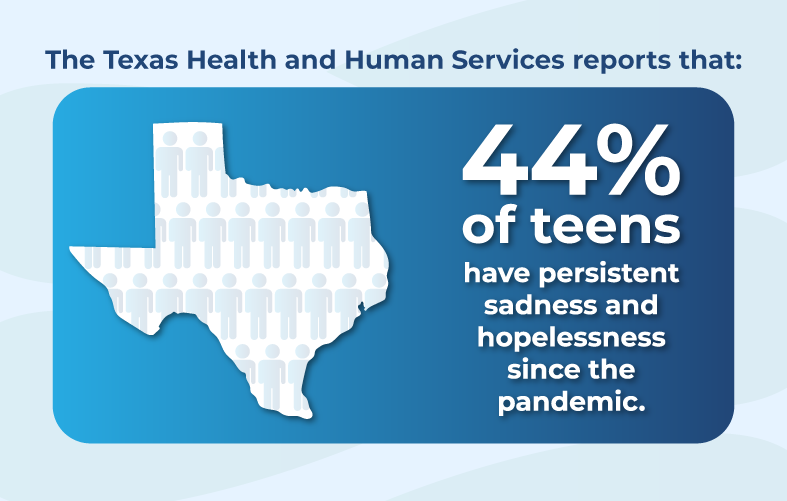
The Texas Health and Human Services reports that 44% of teens have persistent sadness and hopelessness since the pandemic. These are common symptoms that indicate someone might have depression. At Bricolage Behavioral Health, we aim to reduce the number of teens in our community who have these and other symptoms associated with this condition. That is why we provide teen depression treatment in Flower Mound, TX.
Depression is a mental health condition. It impacts the way someone behaves, feels, and thinks and might create concerns in the person's life. Bricolage Behavioral Health knows that depression is something that affects everyone, including teenagers. This condition does not indicate your teen is lazy or isn't trying hard enough to overcome it. It often requires treatment to learn how to manage their symptoms.
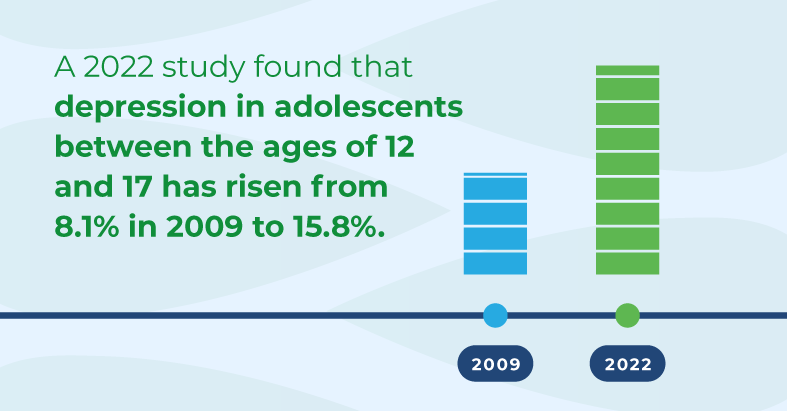
It is deeply concerning how many teenagers in our community are experiencing depression. A 2022 study found that depression in adolescents between the ages of 12 and 17 has risen from 8.1% in 2009 to 15.8%. As a parent, it is crucial to remember that healing happens every day. With the proper support and resources, your child will develop the skills and tools needed to navigate this condition and find a healthier, brighter future.
While there is not a single reason for depression to exist in teens, there are a lot of things that teens go through that might result in the condition forming. These can be genetic, like a family member who has depression, or due to life events, such as bullying, family conflict, or health concerns. Some teens may be more prone to experience seasonal depression, which is when they have these symptoms during the changing of the seasons. Usually, this is during the fall and winter, but some experience it during the spring and summer.
When your teen receives the proper treatment for their symptoms, they have a significant opportunity to recover and reconnect with their inner strength. Through this process, they will interact with people who genuinely understand what they are going through and make meaningful progress in various areas of their lives. As a parent, supporting them through this journey helps them feel seen, valued, and hopeful for the future.
At Bricolage Behavioral Health, we treat depression through 2 programs: day treatment and outpatient treatment. The symptoms of depression can feel terrifying, and you might not know which program will best suit your teen’s needs. Our expert team will work with you and your child to decide which of our programs will provide them with the most effective recovery outcome. Your teen might change their level of care at any point to the other one. Moving between either program is expected and normal for your child’s recovery process. Everyone heals at their own pace, and there is no wrong answer to that journey.
Your teen will be exposed to whole-group and individual therapy during both programs. Whole-group therapy is unique in Flower Mound, TX, as it encourages every person in the session to actively participate in their treatment. During whole-group therapy, your child will participate in pair work, projects, role play, and focus tasks. This means your teen will participate in multiple activities, encouraging them to interact with peers, build necessary skills, and learn from others in similar situations. This differs from other programs in our area that focus on a round-robin approach, when the therapist talks to each teen one at a time, and the others are required to listen passively. More often than not, this leads to them not listening and being unable to learn from their peers.
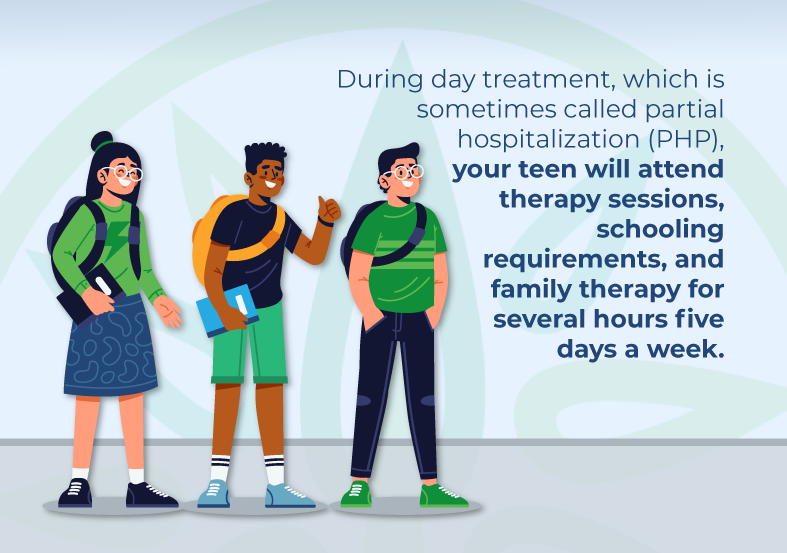
During day treatment, which is sometimes called partial hospitalization (PHP), your teen will attend therapy sessions, schooling requirements, and family therapy for several hours five days a week. These aspects work together to promote a well-rounded approach to helping your child heal and provide them and you with the necessary support to overcome their symptoms.
Day treatment is best suited for teens who need more intensive care than what is offered at the outpatient level. Signs that your teen might require this level of care might include having thoughts of suicide or self-harm but not being an immediate danger to themselves, having symptoms that significantly impact their ability to function or complete tasks, and needing a more structured approach to care. These are all signs that your child would find the most benefit from a day treatment program to find healing from depression.
The therapy sessions your child attends during this level of treatment will be focused on helping your teen reach the goals they have as individuals. Their goals might differ from yours, but that doesn't mean we won't address them. For example, if your teen with depression wants to make friends, we will help them learn the skills they need to do that. In addition, we will explore their depression with a secondary approach by collaborating with your teen on how it can help them accomplish their goal of making friends.
During day treatment, family therapy is a required part of the program. This allows us to communicate regularly with you about your child's progress. We also provide you with the necessary knowledge and tools to continue to support your teen even after they have left our care, which is vital for a successful recovery from depression.
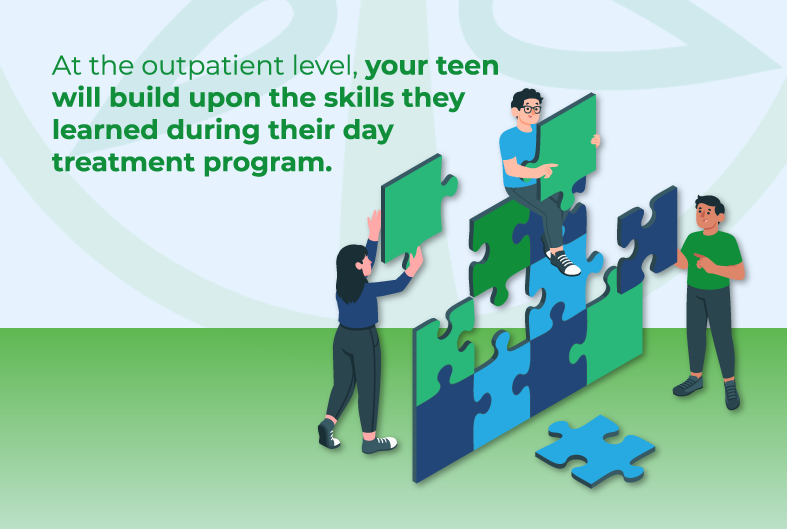
At the outpatient level, your teen will build upon the skills they learned during their day treatment program. The main difference between the two programs is that outpatient treatment meets for fewer hours during the day, enabling your teen to attend school still and maintain their daily responsibilities while recovering from depression. This level of care is also suitable for individuals who do not require as intensive care as day treatment provides. This would include teens who have symptoms that impact their lives but can still complete some tasks or adolescents who do not currently have thoughts of suicide or self-harm.
While family therapy is not required for outpatient treatment at Bricolage Behavioral Health, we regularly discuss your child's progress. Your teen is not alone, and they need your ongoing support and compassion. We are also here to help you develop the tools necessary to provide your child the assistance they need upon completing outpatient treatment at our facility.
Both sadness and grief are normal human reactions that anyone from children to teens to adults will experience in their lifetime. Sadness happens when experiencing something that makes you or your child upset or cry, but this emotion is temporary. Like all emotions, sadness will not persist for several weeks. Grief happens after losing someone, something, or an idea your teen loved and cared about. Grief often lasts longer than sadness and might be mistaken for a depression disorder. However, like sadness, it is also temporary and, for the most part, will slowly decrease in intensity within a year of the loss.
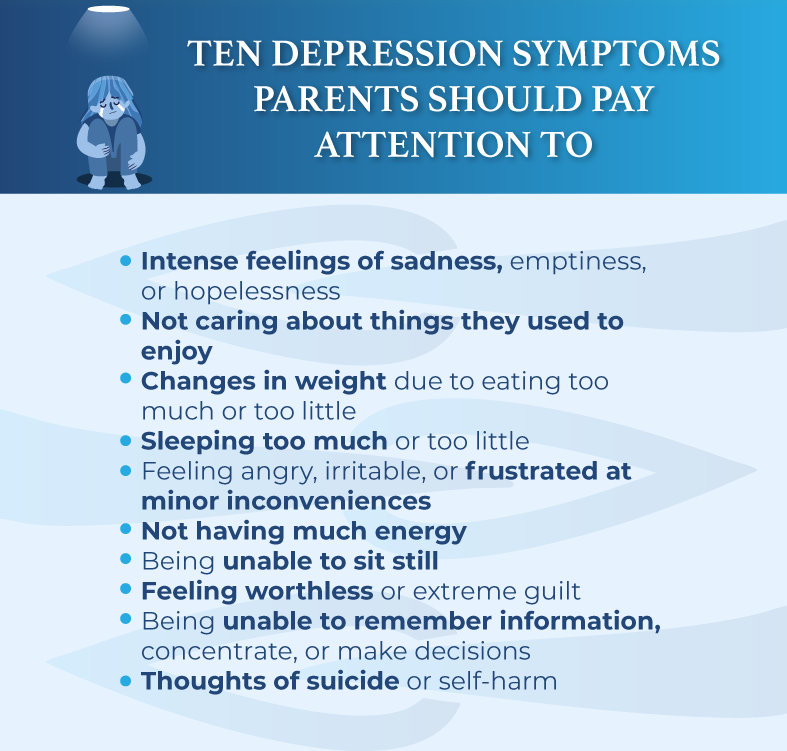
If your teen is experiencing depression, know that all hope is not lost. Your child does not have to feel this way for the rest of their life, and treatment is the best way for them to learn how to manage the symptoms they have. Speaking of their symptoms, being aware of your child's symptoms can help you better advocate for them with their doctor or therapist for a proper diagnosis. These symptoms can also indicate when your child might require immediate treatment. The most common depression symptoms found in teens include:
Signs that your teen might be having thoughts of suicide include talking about it, giving away prized possessions, seeking weapons, or saying goodbye to loved ones. Talk with your teen if you notice any of those signs by asking them if they are considering suicide. Having a compassionate and calm discussion about suicide will not encourage your child to try. Instead, it provides you with the necessary information to get your teen the help they need.
If your child is experiencing thoughts of suicide, it is crucial to seek immediate treatment. As a parent, feeling overwhelmed and unsure of how to help your teen face these thoughts or engage in these actions is natural. Please know that you are not alone. With timely intervention and effective therapy, children and teens heal and learn how to work with difficult emotions.
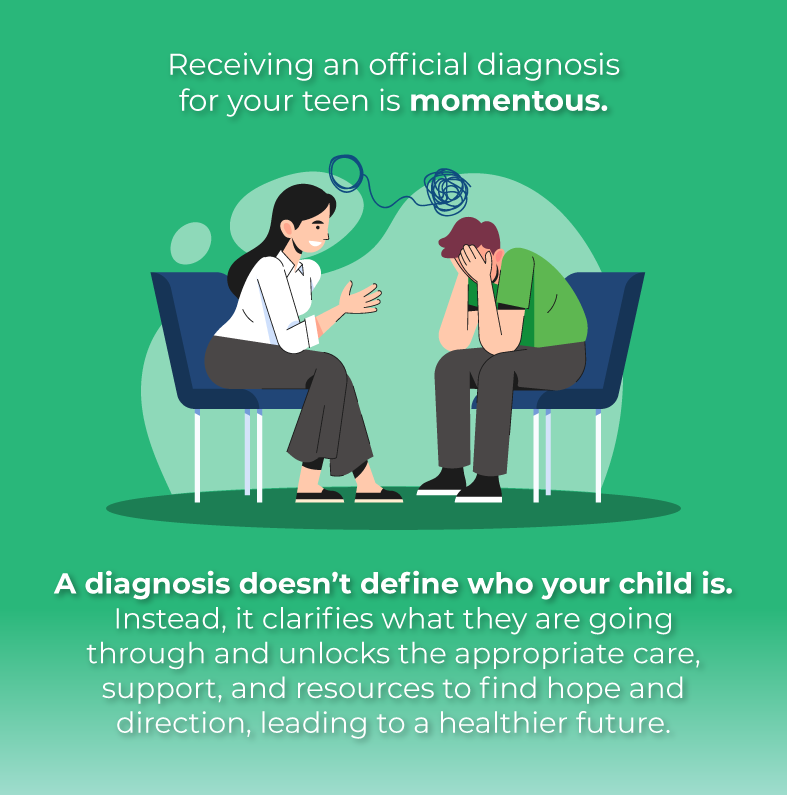
Receiving an official diagnosis for your teen is momentous. A diagnosis doesn’t define who your child is. Instead, it clarifies what they are going through and unlocks the appropriate care, support, and resources to find hope and direction, leading to a healthier future.
Participating in the appropriate treatment helps them manage their emotions, reduces unhealthy coping mechanisms, restores their bond with you, and helps them discover their inner strengths. Depression often makes your child feel like they are the only ones who have ever felt this way, and receiving an official diagnosis can help them know that there are other teens with similar circumstances.
The only place you can get a depression diagnosis for your teen is through their doctor or a mental health professional. During your appointment, the medical professional will provide your child with a psychological evaluation and discuss their emotions, school life, behavioral changes, and if they have had thoughts of suicide. These questions are all helpful in leading them to make an accurate diagnosis of your child's depression. Upon receiving an official diagnosis, your child will have completed the first step in their recovery process.
After receiving an official diagnosis for your child, the next step is to find a treatment program that genuinely understands and prioritizes your child’s unique needs, goals, and interests. At Bricolage Behavioral Health, we believe every teen who walks through our doors carries incredible strengths, even if they don’t know what those are yet. Our mission is to help them uncover those strengths and equip them with the tools to find healing from depression. Contact us today to schedule your first appointment.

Bricolage Behavioral Health provides compassionate depression treatment to adolescents in Flower Mound, TX. We take an evidence-based approach to therapy that builds mutual trust between our therapists and your child. To learn more about how we treat depression, call us at 469-968-5700 today.
Bricolage Behavioral Health: Where Teen Minds Matter

Bricolage Behavioral Health is strength-based, skills-based, evidence-based, and medication-light. We empower clients to develop the skills they need to take control of their mental health with effective, science-backed therapy.
At Bricolage Behavioral Health we believe that whole family healing affords your child the best chance for long term mental health and can put your loved ones on the path to a healthier, happier life.
Bricolage Behavioral Health
3204 Long Prairie Road
Suite A
Flower Mound, TX 75022
Mon - Fri: 8:30 AM–9:00 PM
Sat & Sun: 9:00 AM–5:00 PM