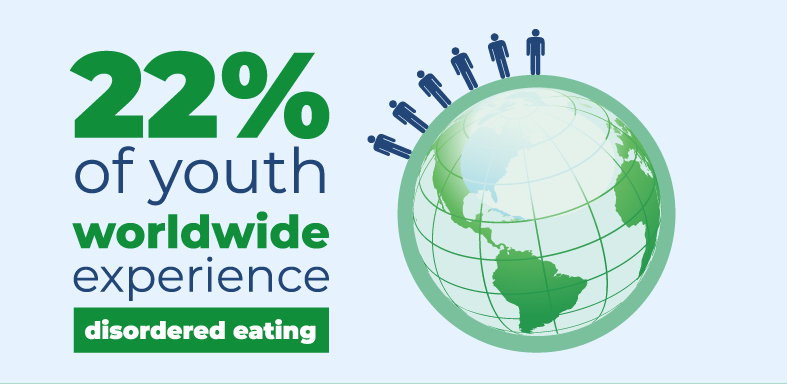
22% of youth worldwide experience disordered eating, according to a 2023 meta-analysis. That’s 1 in 5 children.
That number is alarming and not well-known.
That’s the story of eating disorders, though. They are conditions of secrecy and shame – frequently downplayed by the people living with them, and sometimes the people around them, too.
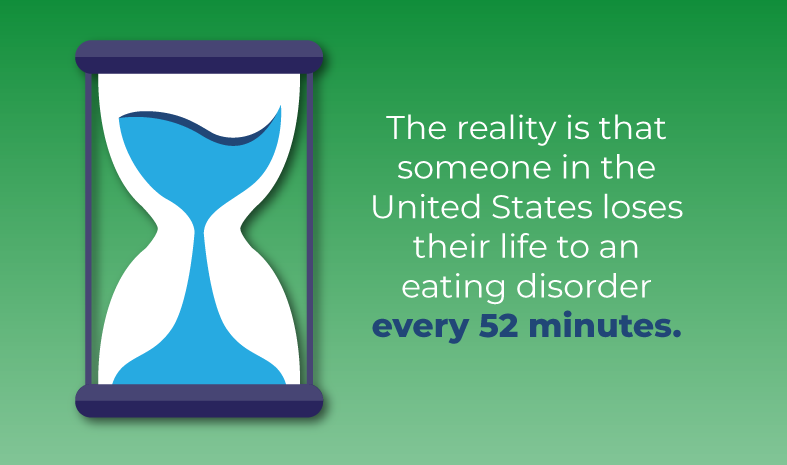
The reality is that someone in the United States loses their life to an eating disorder every 52 minutes. They’re life-threatening, and anyone with an eating disorder needs additional support and treatment.
That number is alarming and not well-known.
That’s the story of eating disorders, though. They are conditions of secrecy and shame – frequently downplayed by the people living with them, and sometimes the people around them, too.
The reality is that someone in the United States loses their life to an eating disorder every 52 minutes. They’re life-threatening, and anyone with an eating disorder needs additional support and treatment.
Eating disorders and disordered eating are not the same thing. You can think of it like you’d think of oranges and fruit. All oranges are fruit, but not all fruits are oranges. Similarly, all eating disorders qualify as disordered eating, but not all disordered eating is an eating disorder.
Eating disorders frequently require a high level of medical care, and even feeding tubes in the case of severe malnutrition. We don’t offer that sort of treatment at Bricolage. Teens living with disordered eating are welcome and encouraged to see us, but if they’re diagnosed with a condition like anorexia nervosa or bulimia, they’ll likely need more intensive medical care than we offer.
How do you know if your child is experiencing disordered eating?
In the study mentioned above, a young person was classified as experiencing disordered eating if they answered “yes” to two or more questions on the SCOFF tool. The questions are:
“Testing positive” for disordered eating on the SCOFF tool doesn’t necessarily mean a child meets the DSM-5 criteria for an eating disorder that many professionals follow. However, that also doesn’t mean the child’s eating habits are healthy or safe.
The most well-known eating disorders are anorexia nervosa, bulimia nervosa, and binge-eating disorder. While receiving a diagnosis of one of these conditions can be a wake-up call and clear sign that someone needs treatment, you don’t need to receive a diagnosis to need support for disordered eating.
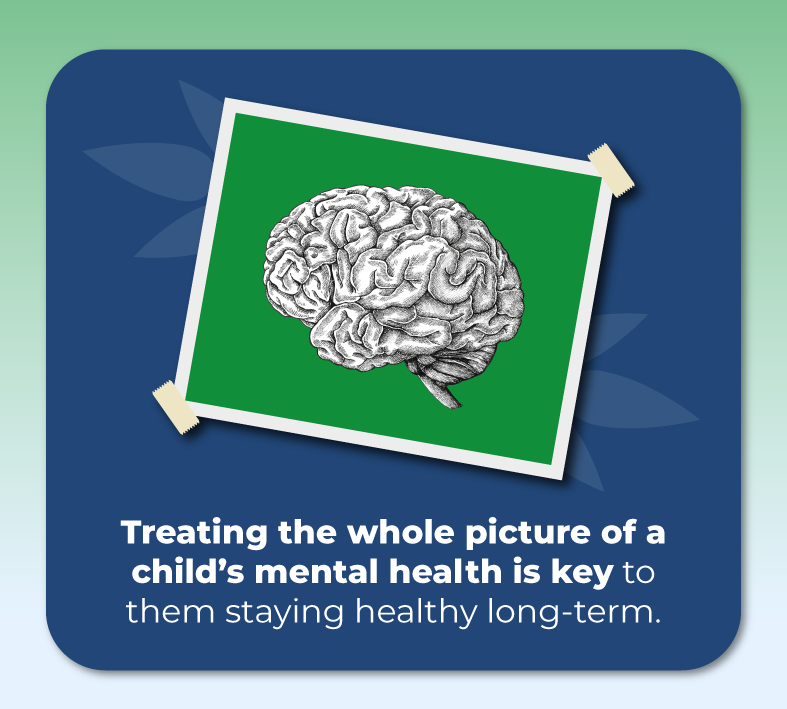
At Bricolage Behavioral Health, we focus most on the child’s symptoms, and why they exist – not a “one-size-fits-all” approach based on a specific diagnosis. Kids with disordered eating often come to us with other mental health symptoms, trauma, and a multitude of other things we need to address before they can fully get better. Treating the whole picture of a child’s mental health is key to them staying healthy long-term.
We start treatment with a lot of questions. We ask these questions not just to build your child’s individualized treatment plan but to guide them to realizing the answers themselves. Once we identify the motivation behind a teen’s disordered eating, we can address the root cause bit by bit. Your child arriving at the answer without us telling them is important because it allows them to better understand themselves and trust that our treatment is the right choice to address their concerns. Trusting us is a lot harder if we’re telling them how they feel and what they should do about it.
We prioritize your child’s goals every step of the way. In the case of disordered eating, however, one of their goals is probably to lose more weight. Instead of encouraging or supporting that goal, we ask them more questions to determine why they want to lose weight. If it’s to look more attractive, we can work on building self-esteem and confidence. If it’s to be a better fit for a certain activity, like gymnastics or modeling, we’ll work on setting healthy, alternative goals to improve their performance in those areas. Everyone will have their own “why,” which is completely okay! We’ll find a path to healing for your child, no matter what.
Cognitive behavioral therapy (CBT) is a big part of treatment for disordered eating because it teaches kids to identify harmful thoughts and behaviors and correct them. After identification and correction, there is a lot of practice of more productive behavior and thinking.
Your child will get much of this practice in our unique whole-group therapy. This method is specifically engineered by Bricolage to keep every child engaged in the session every step of the way, as opposed to only focusing on and involving one kid at a time. Teens learn and practice through videos, written work, readings, discussions, and more. They build social skills and relationships they can carry with them outside of therapy, too, and the support of other kids is a huge asset in recovery.

Because there are different types of disordered eating – including eating disorders – symptoms look different between them. Someone with anorexia will have different symptoms than someone with bulimia, and so on. There tend to be some common patterns with all disordered eating, though:
If you notice these signs in your child, talk to their doctor. It’s rare for anyone with disordered eating to want to get help for it. They usually think their behavior makes sense and is what they should be doing, and they won’t be receptive to change. That doesn’t mean they don’t need treatment. It means they’re so locked into their unhealthy thought and behavior patterns that they can’t see the damage they’re doing.
If disordered eating progresses to a full-blown eating disorder, it can be life-threatening. It’s ideal for your child to agree to treatment, but ultimately, what’s most important is their health and safety. If you need to go against their wishes to get them the help they need, you aren’t a bad parent. They might be upset with you now, but further into the recovery process, they’ll be grateful.
There’s no singular cause for eating disorders. They sometimes run in families, but this doesn’t mean they’re genetic. Disordered eating can also be learned through observation, and if a parent engages in it, their child might see it as the right thing to do – or at the very least a viable option.
Eating disorders are often influenced by other mental health conditions and symptoms. An anxiety disorder can cause someone to fixate on and feel anxious about their appearance, and depression influences people’s self-worth for the worse. Someone with OCD might meticulously count calories or develop disordered eating as a way to feel in control where they otherwise don’t. For some people, it can become an unhealthy coping mechanism. Trauma also frequently plays a role.
Social and cultural factors significantly influence eating disorders, too. Girls experience eating disorders more often than boys, likely due in part to the extreme beauty standards to which they’re exposed. They aren’t exclusive to girls, though. For a long time, they were considered a culture-bound syndrome, meaning it was specific to a particular group – in this case, middle and upper-class white girls and women. However, over the past decade, eating disorders have spread across genders and cultures.
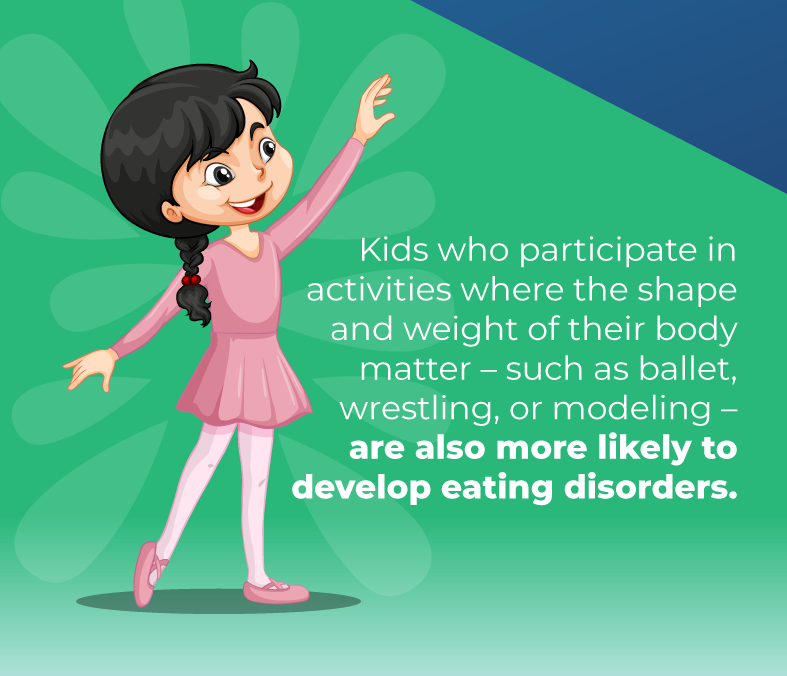
Kids who participate in activities where the shape and weight of their body matter – such as ballet, wrestling, or modeling – are also more likely to develop eating disorders. So are kids who are bullied, especially based on their physical appearance.
Finding out the “why” behind your child’s disordered eating is key to what we do at Bricolage. That “why” is what we treat – not just the disordered eating itself.
The best thing you can do for your child is seek treatment for them. Disordered eating is complicated, and it can be dangerous. Don’t expect yourself to know how to manage it, especially not on your own. You can’t force your child into healthier eating habits – recovery is about a lot more than food.
Outside of getting help for your child, you can never go wrong with reminding them how much you love them and offering to listen if they ever want to talk. It might be tempting to compliment your child on their appearance in hopes that they feel better about themselves. It’s significantly more helpful to praise them for other qualities, like their skills and personality. This takes the focus off their appearance altogether, which is what we want.
Once your child is in treatment for disordered eating, you’ll have an important role to play. What that looks like will depend on your child’s needs and the way their therapist approaches the situation. Be sure to communicate clearly and ask any questions you have. They’ll have the best advice on how to help.
Recovery takes time, so patience is critical. Don’t lose hope when your child takes steps backward instead of forward. Healing is rarely linear. Keep encouraging them in their recovery, and don’t give up.
Disordered eating doesn’t have to rule your child’s life anymore. Meal times won’t always be an ordeal, and one day their self-esteem and body image will improve – but it’ll be hard without help. It will take your support, hard work from your child, and a lot of patience, but recovery is possible. Bricolage can help.
Bricolage Behavioral Health offers mental health treatment for kids in Flower Mound, Texas, and surrounding areas. Neurobiology guides our treatment plans, ensuring your child gets the best science-based care possible. This approach does more than treat the symptoms – it gets to the root cause and empowers your child to heal comprehensively from any mental health concerns they’re managing. Call 469-968-5700 to get started.
Bricolage Behavioral Health: Where Teen Minds Matter

Bricolage Behavioral Health is strength-based, skills-based, evidence-based, and medication-light. We empower your child or teen to develop the skills they need to take control of their mental health with effective, science-backed therapy.
At Bricolage Behavioral Health we believe that whole family healing affords your child the best chance for long term mental health and can put your loved ones on the path to a healthier, happier life.
Bricolage Behavioral Health
3204 Long Prairie Road
Suite A
Flower Mound, TX 75022
Mon - Fri: 8:30 AM–9:00 PM
Sat & Sun: 9:00 AM–5:00 PM