If you’re searching for behavioral health treatment for your child, there are many options. A lot of those choices are “evidence-based.” Does that mean every therapy will work for everyone? Definitely not. It depends a lot on context.
Not every individual with depression will respond to the same therapy, as each person is navigating their own unique set of circumstances. Depression due to a breakup or financial issues requires a different approach than depression due to grief or an unfulfilling job.
There’s also another crucial component of treatment to consider: the therapeutic alliance.
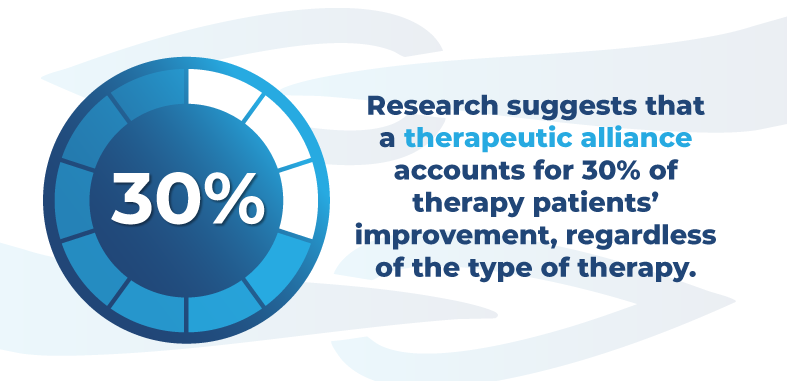
Research suggests that a therapeutic alliance accounts for 30% of therapy patients’ improvement, regardless of the type of therapy. How is that, and what is a therapeutic alliance alliance anyway? Let’s talk about it.
“Therapeutic alliance” is the clinical term for trust between a patient and their therapist. Like any other type of alliance, it’s the confidence that someone is on your side – in this case, your therapist. If a patient doesn’t trust their therapist, then they are far less likely to follow the advice or guidance their therapist offers. There is very much a self-fulfilling prophecy aspect to therapy. If patients don’t believe something will work, they won’t try it.
We would often categorize this as motivation. A patient has to be motivated to put in the hard work to change. Trust is the most critical element, but the patient’s general feeling about the therapist is also important. If your teen doesn’t like their therapist, they’re going to be reluctant to come to therapy and reluctant to engage with their therapist when they do.
Of course, it’s not uncommon for teens to not like a therapist simply because they don’t want to be in therapy. Their stubbornness and feelings regarding the situation they’re in can make building a therapeutic alliance challenging at first.
So when looking for treatment for your child, you should be gauging your teen’s reaction to their therapist, but you also want to make an assessment yourself. “Is the therapist someone who can overcome my child’s defensiveness or lack of motivation? Are they someone who can build a relationship with my child?” It takes persistence, patience, and compassion – on your part and the therapist's part. Therapists with a good sense of humor and willingness to have fun often find more success, too.
Every child is different. One will warm up to their therapist quickly, and another will take several sessions before they’re ready to properly open up. There’s nothing wrong with either child’s approach to therapy. Instead, it’s on us as mental health professionals to learn how to communicate with that child and open the door to developing a therapeutic alliance.
It’s an unfortunate reality that sometimes, a therapist and child just aren’t compatible. There’s nothing wrong with this either, even for as frustrating as it can be. It’s not a failure on the child’s part, and it doesn’t mean the therapist is bad at their job.
To better understand this, think of any reality TV competition. Contestants will make alliances with each other if they think they can help each other achieve goals, but some people just don’t mesh. You wouldn’t build an alliance with someone who constantly irritates you or who doesn’t understand the way you communicate. It’s completely natural not to build an alliance with everyone.
While the relationship between a patient and a therapist is a lot different than the one between contestants on a competition show, a therapeutic alliance is also built on the patient’s belief that the therapist can help them achieve their goals. Some therapists are better suited to helping with certain goals than others, and kids are smart – they know this, whether they realize it or not.
That means building a therapeutic alliance can take some trial and error, but taking the time to find the right therapist for your child is well worth it. A solid therapeutic alliance can change their life.
Think about it: if you see a random salesman on TV trying to get you to call to buy some new product, you’re more likely to roll your eyes and think it doesn’t work than pick up the phone. Now, if your friend works for the company selling the same product and tells you how great it is, you’re a lot more likely to believe it’ll work.
The biggest difference in these scenarios is trust. That guy on TV is just a random guy to you at best, if not someone trying to scam you. On the other hand, you know your friend wants what’s best for you and would only recommend something that improves your life. This analogy applies to therapy, too.
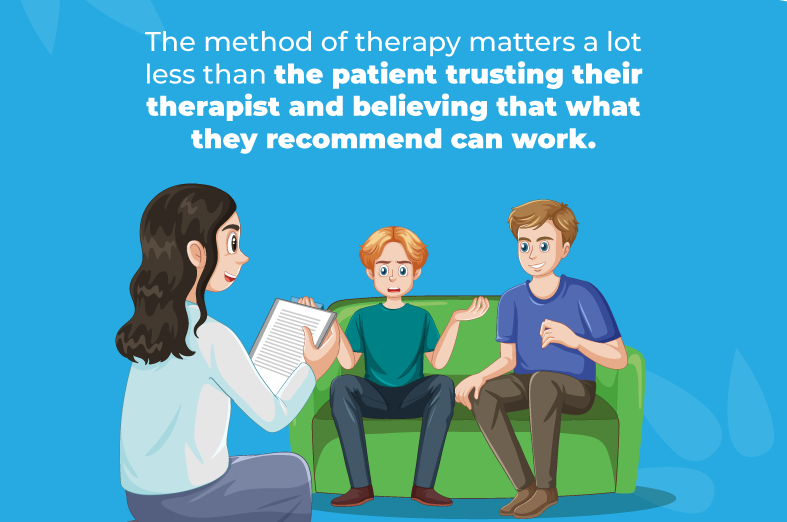
The method of therapy matters a lot less than the patient trusting their therapist and believing that what they recommend can work. That alone can massively change a child’s mindset. When you combine that trust with actionable steps to improve their situation, you have a recipe for long-term success.
Teens being reluctant to enter therapy is normal. It’s perfectly OK if your child has some resistance. They probably don’t like eating their vegetables or going to school every day either. And, let’s be honest, we feel the same way sometimes. As parents, many of us would be happy to pass on going to work some days ourselves! This is life.
One of our roles as parents is to help our children make better choices even if they don’t yet see the value of that choice.
Here at Bricolage, we’re used to working with teens to gradually build trust and foster a strong relationship. By being nonjudgemental, taking the time to listen to your teen’s perspective, providing guidance and support they find valuable, and using engaging group therapy delivery techniques, we work to overcome any initial reluctance. Some kiddos take a bit longer to warm up than others, but we’ve got a pretty good track record (and a lot of patience!)
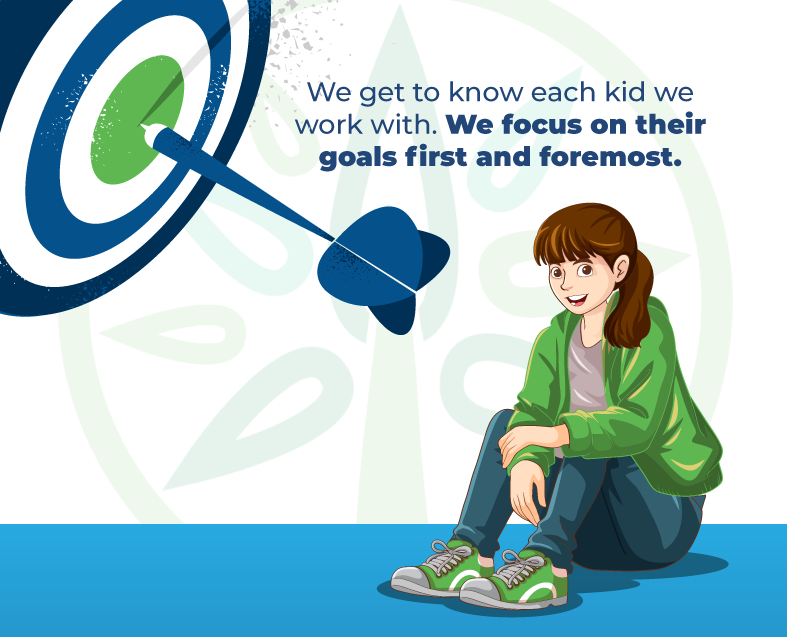
We get to know each kid we work with. We focus on their goals first and foremost. If your teen is drinking alcohol, as parents and therapists, we can see the value in reducing or eliminating that behavior. But our teens have their own ideas!
None of us like being told what to do, and our children are no different. If we’re helping a teen reduce or eliminate alcohol use, we need to identify the teen’s personal goals and help them achieve them. A lot of times, addressing their bad habits or maladaptive behaviors is a natural part of that process. The teen in this example might drink because they think it’s fun when they’re otherwise stressed. If their primary desire is to be less stressed, we can teach them stress-management techniques, healthy coping mechanisms, and other strategies to deal with that more safely. Once they’re confident they can manage their stress without alcohol, it’ll be a lot easier to eliminate that alcohol use. By then, the teen will also believe their therapist truly wants to help them because they would’ve found ways to support them in their goals first.
Bricolage also focuses on every child’s strengths and builds upon those. This doesn’t mean we don’t address weaker areas, but we harness and shine a light on their positive qualities first. By focusing on building up the kids we work with instead of concentrating intently on their weaknesses, it’s easier for them to put their trust in us.
We also emphasize keeping therapy engaging for the kids. Some might even call it fun. We’re very familiar with uncooperative teens and unwilling participants in therapy, and we have what it takes to make progress with them, too.
We love what we do at Bricolage Behavioral Health. Watching kids grow and heal is one of the greatest privileges of our lives – but we’re mindful that anyone can say that, and you’ve probably read it countless times on other facilities’ treatment pages. We won’t make any grandiose claims, but we can confidently say that no one else in the country approaches youth behavioral health like we do at Bricolage. If your child hasn’t found success in other programs, don’t give up – give us a call.
Bricolage Behavioral Health services youth in Flowermound, Texas, and its surrounding areas. One of the highlights of our program is our engaging whole-group therapy. In traditional group therapy, one child engages with the therapist at a time. Every participant in Bricolage’s group therapy is involved and growing throughout the session. No matter what concerns your child is living with – we get to the bottom of it and empower them to heal. Call 469-968-5700 today.
Bricolage Behavioral Health: Where Teen Minds Matter

Bricolage Behavioral Health is strength-based, skills-based, evidence-based, and medication-light. We empower your child or teen to develop the skills they need to take control of their mental health with effective, science-backed therapy.
At Bricolage Behavioral Health we believe that whole family healing affords your child the best chance for long term mental health and can put your loved ones on the path to a healthier, happier life.
Bricolage Behavioral Health
3204 Long Prairie Road
Suite A
Flower Mound, TX 75022
Mon - Fri: 8:30 AM–9:00 PM
Sat & Sun: 9:00 AM–5:00 PM