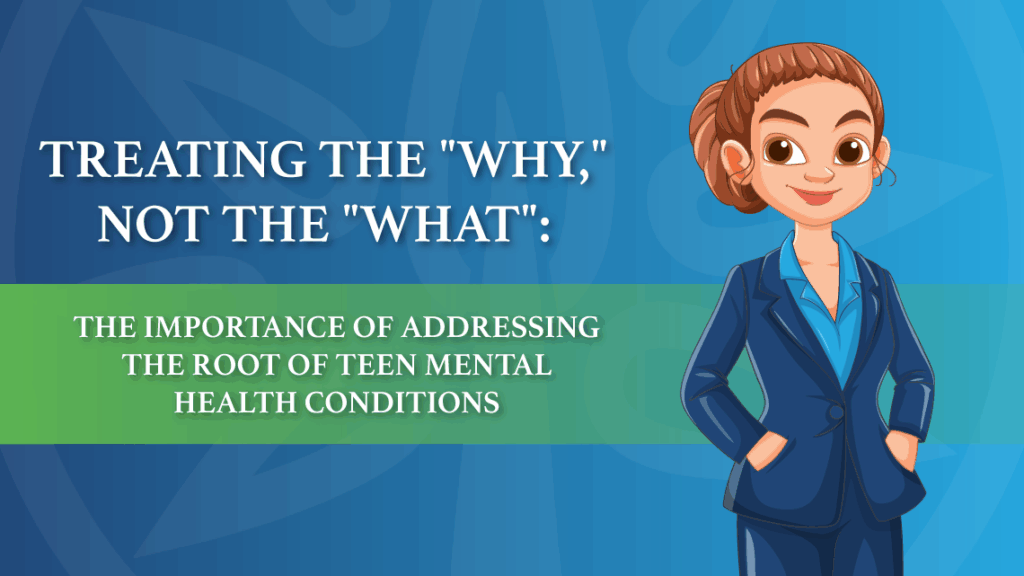
1-in-5 Texas youth experiences a mental, emotional, developmental, or behavioral concern.
Some teens will receive a diagnosis due to their symptoms, but others won’t. What you might not realize is that the reason behind the symptoms is far more important than fitting them in a box to suit diagnostic criteria.
You can think of a diagnosis as an umbrella that a cluster of symptoms fits under. Sure, those symptoms are labeled and more organized now, but what does that do to help a teen living with them overcome them?
At Bricolage Behavioral Health, we emphasize focusing on the “why” behind mental health conditions, rather than grouping symptoms. Identifying the root cause of every symptom is crucial to promoting long-term healing. We’ll explain why it’s so important, and how we find the “why” for every child who comes to us.
There’s nothing wrong with receiving a diagnosis. In some ways, it’s helpful. It gives mental health professionals more insight into the child’s situation and offers a starting point for treatment.
However, there are also important “side effects” of being labeled with a mental health condition that we need to acknowledge.
Some teens will view a diagnosis as an unchangeable part of who they are. Kids diagnosed with borderline personality disorder (BPD) often experience this. With the diagnosis comes the admission that something is “really wrong with them.” They think their brain is broken, or that their very personality is disordered. They start believing that nothing will change this. The disorder is who they are.
Of course, we know that’s not actually true, but it’s a lot for kids to contend with. There are many things teens with borderline personality disorder can do to reduce their symptoms and live a stable life. Our kids need to know that there are always ways to improve their mental health, and in this example, a diagnosis doesn’t feel helpful. If that teen with BPD wasn’t labeled with BPD, and instead was just treated according to their symptoms and experiences, would they have more success?
It’s hard to know for sure, and it depends on each individual, but one thing’s for sure: diagnosis is not the be-all end-all of mental health. The most effective treatment will treat each child as a whole person with unique experiences that make them who they are, not just a diagnosis.
That’s wonderful, and it absolutely matters! It can be very comforting to put a name to the symptoms your child is experiencing. It also serves as a reminder that they aren’t alone and gives them an easier way to talk about and find resources related to their situation.
However, diagnoses are exactly that: putting a name to symptoms. While some therapies are beneficial for everyone with the same diagnosis, there are many aspects that can’t be addressed with a one-size-fits-all approach.
Let’s look at panic disorder as an example. Strategies to help teens regulate their anxiety and calm themselves down will likely help everyone with the diagnosis. However, everyone with panic disorder has different triggers and develops the condition for different reasons. One teen might have experienced a car accident and now has panic attacks every time they have to ride in a car. Another might’ve been stalked and has panic attacks when they feel like someone is following them. Another teen might not have a clear event that sparked their panic attacks at all. This is all completely okay and treatable with an individualized care plan.
Bricolage’s approach is also helpful for teens who don’t have a clear diagnosis. Many teens are diagnosed with depression or anxiety simply because their mental health professional can’t think of a better condition to diagnose that accounts for their symptoms. Others who could benefit from treatment don’t receive a diagnosis at all. In these cases, the criteria for mental health conditions are alienating instead of encouraging. What about the teens who fall one symptom short of the DSM-5 criteria for generalized anxiety disorder? Their psychiatrist may or may not diagnose them with the condition anyway. Either way, that teen deserves treatment, too. So does any other teen whose mental health is negatively impacting their quality of life.
Finding the “why” is key to everything we do at Bricolage. The question is, how do we do it?
It starts with open and honest conversations. When we talk to teens, we need to do it with the intention of understanding them, not judging them. There are a lot of connections we have to make ourselves, too. Often, kids don’t know why they feel the way they do, and that’s okay. We discover it together, and realizing there’s a reason for their symptoms is very empowering for young people.
Let’s think about an example. A teen comes to us because their parents can’t get them to stop drinking. We could diagnose them with an alcohol use disorder if they meet the criteria, but what if they don’t? Teen drinking is still harmful, so we need to address why they’re drinking to really solve the problem.
We can start by asking them, “What do you like about alcohol?” Again, this needs to be asked with genuine curiosity, not any judgment. The teen will probably be reluctant to open up at first, but once they decide we’re asking sincerely, they’ll be more willing to talk. They might share that they like drinking because it makes them “loosen up” and feel more confident.
Okay, that’s helpful. For our next goal, we need to determine if this teen is experiencing anxiety when they aren’t intoxicated. Maybe they say they worry about what other people think of them most of the time, and are quite shy, but they aren’t like that when they drink. Now we’ve found an important part of our why: insecurity and potential social anxiety.
The next step is teaching the teen strategies to build their confidence and disrupt anxious thought patterns. If they feel more confident and worry less about what others think of them when they don’t drink, they won’t have much reason to drink anymore.
We can do the same with panic disorder, for another example. If we figure out what triggers the teen’s panic attacks and anxiety, we’ll carefully expose them to those circumstances until they become more comfortable with them. We’ll also ask more questions to help them unpack unhelpful thoughts related to the triggering circumstances, and ultimately empower them to “rewire their brain.”
This can eliminate panic attacks altogether. While medication alone might quell some anxiety and prevent panic attacks, it’s just treating the condition. When we find and treat the “why,” teens heal on every level and gain the ability to overcome obstacles that once seemed insurmountable.
Whether your teen was diagnosed with a mental health condition or is managing unlabeled symptoms, the end goal is the same: teach them the strategies they need to take control of their mental health. What we call the symptoms doesn’t matter as much as treating the reason for the symptoms.
It’s hard to get to the bottom of your teen’s situation alone. Thankfully, you don’t have to! Bricolage's adolescent mental health experts are ready and willing to guide your child to finding their “why” and overcoming it. Take the leap and reach out.

Bricolage Behavioral Health offers mental health treatment to youth in Flower Mound, TX, and surrounding areas. Once we discover your child’s “why,” they’ll go through individual therapy and our specially engineered whole-group therapy. Whole-group therapy is unlike any other therapy in the country. It’s engaging and involves active practice that your teen can apply to their life outside of treatment right away. If your teen could benefit from our care, call 469-968-5700 to get started.
Bricolage Behavioral Health: Where Teen Minds Matter

Bricolage Behavioral Health is strength-based, skills-based, evidence-based, and medication-light. We empower your child or teen to develop the skills they need to take control of their mental health with effective, science-backed therapy.
At Bricolage Behavioral Health we believe that whole family healing affords your child the best chance for long term mental health and can put your loved ones on the path to a healthier, happier life.
Bricolage Behavioral Health
3204 Long Prairie Road
Suite A
Flower Mound, TX 75022
Mon - Fri: 8:30 AM–9:00 PM
Sat & Sun: 9:00 AM–5:00 PM