If you’re the parent of a teen, you know firsthand how determined they can be to do whatever they want. It’s hard to get a teen deadset on using marijuana or drinking alcohol to stop – not just for parents, but for treatment centers, too. You’re not alone if you feel like you’ve tried everything but still haven’t gotten through to your child.
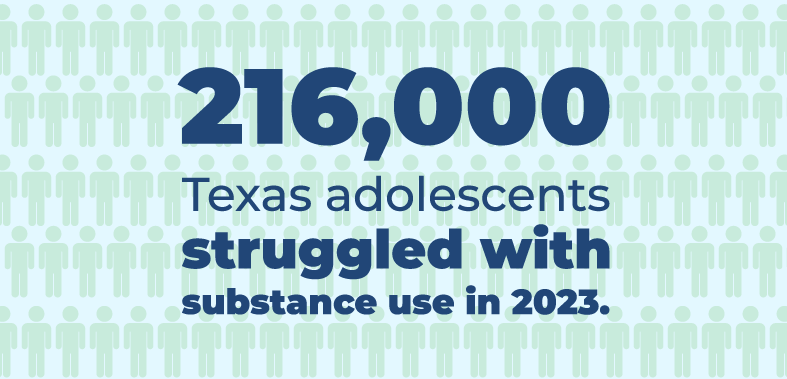
If you feel like the situation is so out of control that substances are significantly harming your teen’s future, you aren’t alone there, either. 216,000 Texas adolescents had a substance use disorder in 2023. That’s a condition that runs far deeper than teenage curiosity or rebellion, and it makes encouraging a substance-free life even more complicated.
Historically, teen substance use was addressed the same way as that used with 40-year old adults–12-step and Alcoholics/Narcotics Anonymous Meetings. While 12-step style programs have been found to be effective for teens who stick with them, less than 2% do!
The problem is that 12-step treatment programs do not use age-appropriate interventions. The 12 steps are prescriptive, telling your teen what they “have to do.” From your own experience, you probably know how well that works.
One of the primary messages underlying 12-step programs is that “you must absolutely stop all alcohol and drug use immediately or you will succumb to a life of disorder and addiction.” That message doesn’t seem realistic to teens, so they ignore it and disengage with such programs. For treatment to be effective, we need teens to buy in. A method with a less than 2% buy-in rate is not what we’re looking for.
Instead of the 12 steps, here at Bricolage, we use an evidence-based methodology specifically developed for teens called The Seven Challenges. The goal of Seven Challenges is similar to the 12-step process– to reduce or eliminate problematic use of substances. But it is much more collaborative than prescriptive. The Seven Challenges respects teens’ perspectives and engages in “real talk”, discussing pros, cons, and alternatives in a realistic manner.
Rather than the authoritarian message of “listen to us and do what we tell you,” the Seven Challenges does exactly that – it challenges teens to critically evaluate their substance use, life, and goals.
For one, teens don’t like being told what to do. It’s in their nature to push boundaries. It’s part of growing up. That doesn’t mean every teen who gets taught that substances are bad and should never be used will go out and try drugs. It does mean they won’t be prepared for when they encounter substances.
That’s an inevitability. Your teen will eventually meet someone who smokes marijuana, and might become friends with someone who drinks underage. Even other illicit substances could be involved.
Another important part of growing up is learning to make decisions. Chances are, you won’t be with your teen when someone offers them drugs. It’s their choice. It’s your role to equip them with the knowledge and skills they need to handle that situation when it happens.
It’s important to talk honestly with your child and teach them how to engage with substances as responsibly as possible. Talking about drugs and alcohol isn’t giving your child the stamp of approval to try cocaine – it gives them strategies they need to resist peer pressure, or in the worst case, stay safe if they choose to try the substance themselves.
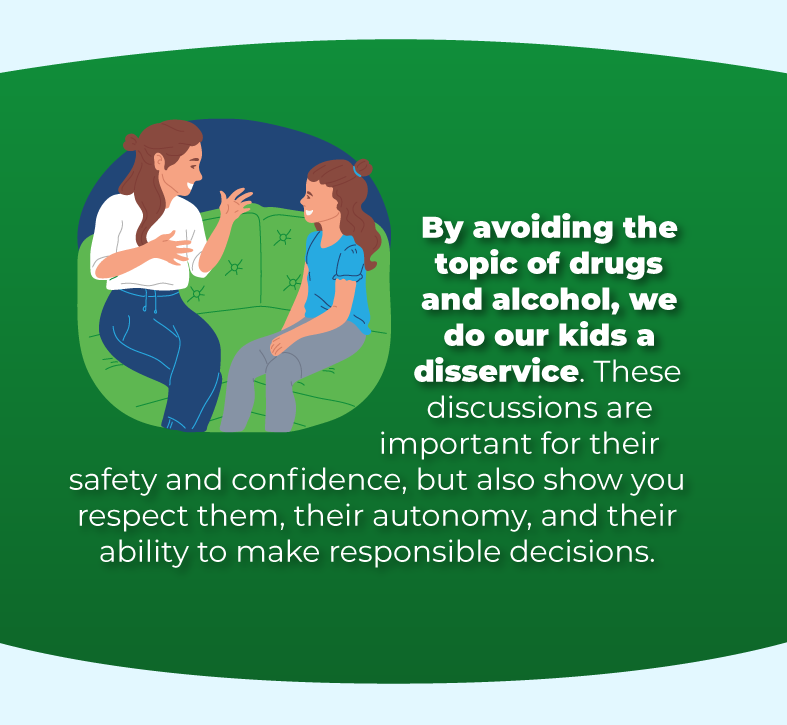
By avoiding the topic of drugs and alcohol, we do our kids a disservice. These discussions are important for their safety and confidence, but also show you respect them, their autonomy, and their ability to make responsible decisions. Teens appreciate that more than you might think!
The Seven Challenges are exactly as the name suggests: challenges related to substance use specifically for teens in treatment to consider and take on to support their recovery. Unlike a traditional 12-step approach to teen addiction treatment, the Seven Challenges aren’t linear steps. They’re designed to be woven into conversation naturally by therapists, so the teens we work with face these challenges and overcome them without knowing it. The Seven Challenges prioritize reflection over immediate behavioral change, which leads to better results in the long term.

These are the Seven Challenges:
Seeing the Seven Challenges laid out is all well and good, but it can be hard to understand them on a practical level without examples. Check out our chart below for how we’d apply them to real conversations and treatment for teens, and why each one is so important.
| The Challenge | The Purpose | What It Sounds Like |
|---|---|---|
| 1. We decided to be open and talk honestly about ourselves and about substances. | The therapist shows they respect the teen’s opinions and autonomy, gaining better insight into their strengths and weaknesses. | “I want you to feel like you can be completely honest here without judgment. What are some things you think I should know about you?” |
| 2. We looked at what we liked about substances and why we were using them. | The teen reflects on their motivations, and the therapist learns more about what the teen feels like they’re lacking without substances. | “How do you think substances have helped you?” |
| 3. We looked at our use of substances to see if they have caused harm or could cause harm. | The teen is forced to consider the potential consequences of their substance use, and the therapist better understands the teen's priorities and fears. | “Has something gone wrong that you think wouldn’t have happened if you weren’t taking substances?” |
| 4. We looked at our responsibility and the responsibility of others for our problems. | The teen learns more about what they do and don’t have control over in their life, empowering them to act accordingly and create change. The therapist can better judge the teen’s self-awareness and what outside stressors might influence them. | “When you got in that fight with your mom, what do you think you did that made the situation worse? What do you think was her fault and not yours?” |
| 5. We thought about where we seemed to be headed, where we wanted to go, and what we wanted to accomplish. | The teen gets a “reality check” and starts considering goals to strive toward to improve their future. The therapist better understands the goals they can center the teen’s treatment around. | “Where do you honestly see yourself in five years if things continue as they are now? What would your life look like in five years if you could have everything you wanted?” |
| 6. We made thoughtful decisions about our lives and about our use of substances. | The teen and therapist have a course of action to improve the teen’s life and behavior. The teen decided it themselves, so they feel strong and have a better sense of control. | “When you think about all of this, what role do you want substances to have in your life going forward?” |
| 7. We followed through on our decisions about our lives and substance use. If we saw problems, we went back to earlier challenges and mastered them. | The teen can be proactive and have strategies to fall back on if they stumble along the way. The therapist can be there for the teen to rely on during every step of their journey. | “I know you wanted to stop using substances altogether and drank again, but that doesn’t make you a failure. Let’s talk about what led you to drink this time and see what we can do instead next time you feel the same way.” |
After reading the purpose of each challenge, you can probably see the benefits of the approach for teens, but let’s take an in-depth look.
The primary strength of the Seven Challenges is that it builds a sense of trust between the therapist and the teen. With its didactic and more prescriptive approach, the 12 steps set the stage for a power struggle between the teen and therapist. The challenges eliminate this power imbalance and make the teen feel heard and valued. This makes it much more likely for them to listen to their therapist’s advice and believe it could improve their life.
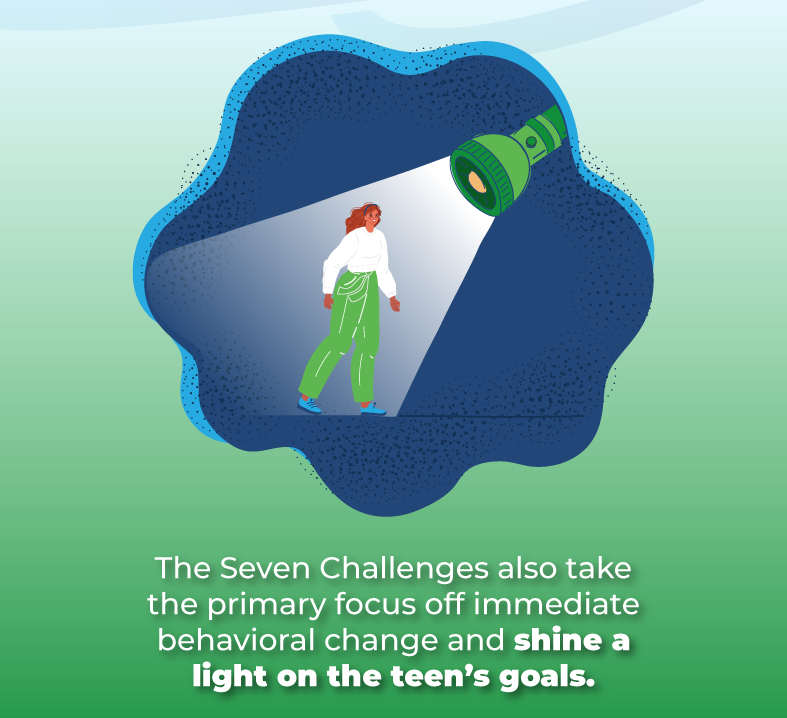
The Seven Challenges also take the primary focus off immediate behavioral change and shine a light on the teen’s goals. Rather than telling a teen what they can’t do, the Seven Challenges works with teens to achieve their own goals and critically examine how problematic use impedes those goals. This is significantly more empowering and motivating for the teen because they clearly see how cutting down on substance use can help them get what they want. If we focus on trying to get teens to stop all substance use right away without considering how complex the situation is or what the teen wants, they’re likely to shut down and refuse to listen.
The Seven Challenges also come with less shame than abstinence-only approaches. With the challenges, all progress toward the teen’s goals is good. It would be awesome if that goal is abstinence! But sometimes that’s not entirely realistic. Our teens who slip up in the pursuit of their treatment goals can reflect on the challenges and work on their weak areas as they grow at their own pace. If we forced the goal of abstinence on them right away, they would get easily discouraged, and are a lot more likely to give up on healing altogether.
Another great benefit is that as we work through the Seven Challenges, they unpack a lot of baggage. Instead of focusing on no longer using substances, we focus on the motivation behind the substance use in the first place, which usually boils down to some other mental health concern, unresolved trauma, or emotional pain. The Seven Challenges enable comprehensive healing and significantly improve mental health outcomes, too.
Yes! There are plenty of ways to apply the Seven Challenges to life as a parent and we’d encourage you to do so. Like any therapeutic intervention, it can be easy to understand and hard to implement effectively, which is why trained therapists in an intensive program may also be the right choice for you and your family. Most parents don’t have 5 hours a day to work with their children on mental health and substance use issues, which is why programs like Bricolage exist.
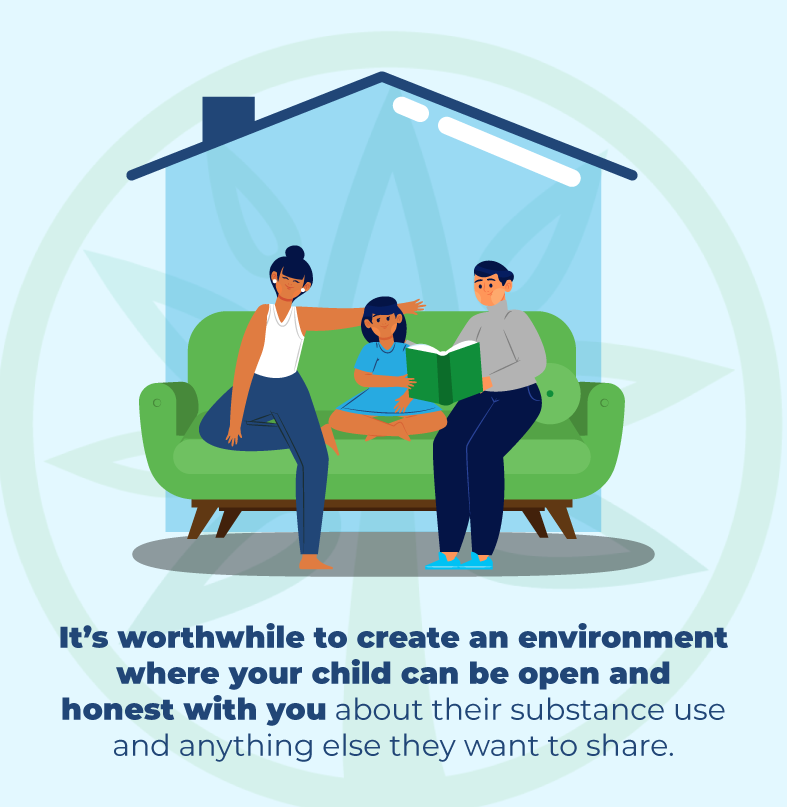
That being said, it’s worthwhile to create an environment where your child can be open and honest with you about their substance use and anything else they want to share. It’s hard, but if you can shift your mindset away from getting your teen to stop using substances as soon as possible and focus on their goals and desires, you’ll have a much easier time getting through to them.
Chances are, you’ll have some things to work on as a parent to support your teen’s recovery. Healing doesn’t happen overnight. It’s a long journey, and it never really ends. It also takes the whole family. Patience is key. Your teen will mess up along the way, make poor choices, and be disappointed in themselves sometimes. Do your best to encourage them, and apologize as needed when you inevitably make mistakes too.
Don’t hesitate to seek help, whether that’s the support of a friend or the expertise of a mental health professional. You aren’t in this alone!

If your teen has been in treatment with little success, know there’s still hope. Maybe approaching their substance use through the Seven Challenges will resonate with them more. It could be the breakthrough they need to take control of their life and build a better future.
At Bricolage Behavioral Health, we focus on the “why” behind every condition first and foremost – not just the diagnosis. We empower Texas youth every day to heal, grow, and become the best version of themselves. Whether it’s through individual therapy or our whole-group therapy, we’ll challenge, support, and guide your teen every step of the way. Ready to get started? Call 469-968-5700 today.
Bricolage Behavioral Health: Where Teen Minds Matter

Bricolage Behavioral Health is strength-based, skills-based, evidence-based, and medication-light. We empower your child or teen to develop the skills they need to take control of their mental health with effective, science-backed therapy.
At Bricolage Behavioral Health we believe that whole family healing affords your child the best chance for long term mental health and can put your loved ones on the path to a healthier, happier life.
Bricolage Behavioral Health
3204 Long Prairie Road
Suite A
Flower Mound, TX 75022
Mon - Fri: 8:30 AM–9:00 PM
Sat & Sun: 9:00 AM–5:00 PM