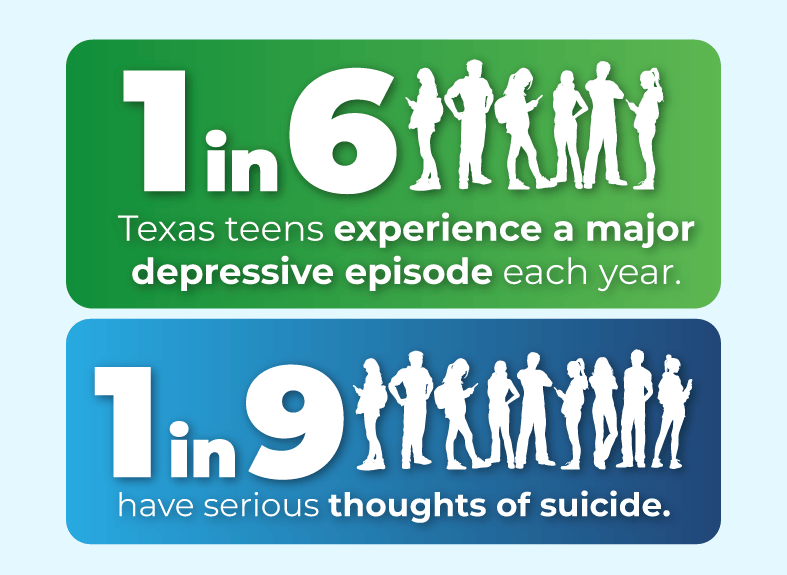
According to teens, school is one of the biggest contributors to their mental health. We can’t pretend these things don’t influence one another, but we often fail to address it.
We talk even less about teens in treatment for their mental health who are still going to school like any “normal kid.” They are normal kids! If these statistics tell us anything, it’s that youth in Texas are having a hard time finding a healthy balance – and that impacts all of them.
At Bricolage Behavioral Health, we believe treatment helps every child, too. Whether it’s regular therapy sessions or something more intensive, mental health treatment equips teens with the tools they need to manage their lives and achieve their goals.
Often, their goals involve school, and so do their stressors. Improving their mental health while they stay afloat academically and in their social lives is a massive task for kids to handle. What can we do to help them? Read on for what you need to know about teens getting treatment while staying in school.
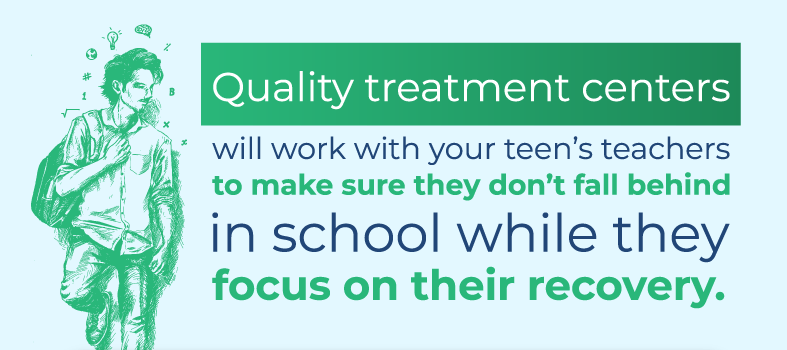
Many treatment programs allow your child to remain enrolled at their school while in treatment, no matter the level of care. It depends on the treatment center and how they handle education. Quality treatment centers will work with your teen’s teachers to make sure they don’t fall behind in school while they focus on their recovery. We have staff dedicated to communicating with kids’ schools and allotted time for them to work on assignments during our partial hospitalization program, for example.
If you’re looking for mental health care that allows your teen to still attend school in person, outpatient treatment is probably more up your alley. Outpatient therapy only happens a couple of days a week, so teens attend school as usual on days therapy isn’t scheduled. Some outpatient programs are designed to take place after school, so kids don’t miss any in-person school time. At Bricolage, our outpatient treatment takes up a few hours two mornings a week.
Getting mental health treatment while attending school is challenging, but it’s also a great opportunity for teens to apply the skills they learn in therapy to their lives right away. We can model real-life scenarios during treatment sessions all we want, but our end goal is for teens to thrive in their lives outside of therapy. There’s no better way to do that than to practice where it really matters!
Teens can report back to their therapists with updates on how their week at school went, and adjust their treatment plans accordingly. Therapists can also celebrate victories with them in real time, which is just as important as highlighting areas that need work.
Taking time off school to focus on recovery is the best choice for some kids, but returning to school once they’re out of treatment is a huge (and intimidating) adjustment. Attending therapy and school simultaneously empowers teens to heal without greatly disrupting their lives and routines.
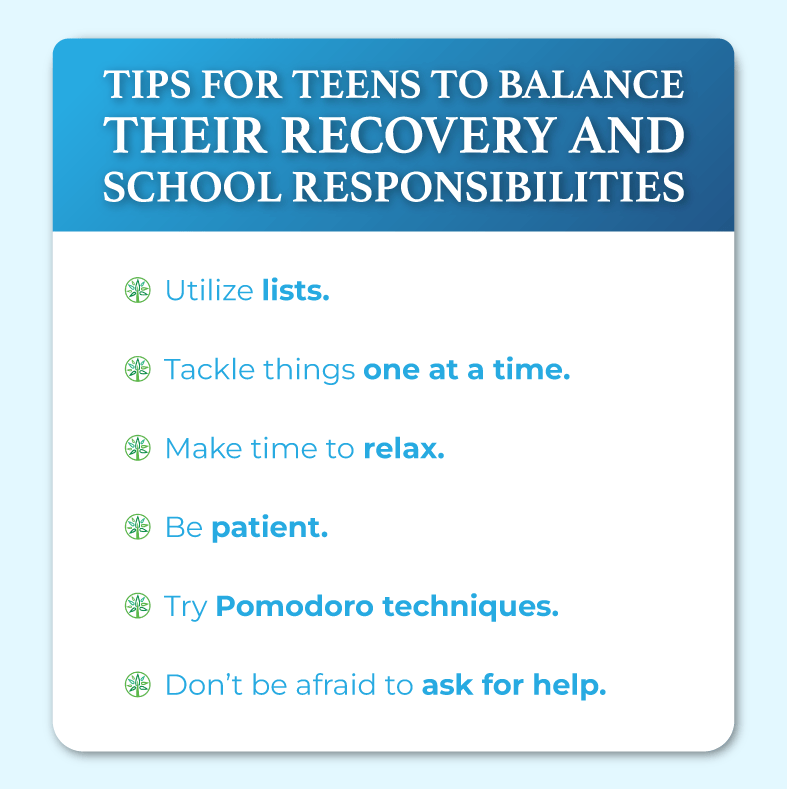
For all the benefits of staying in school during treatment, it isn’t easy. Balancing the two can be overwhelming for anyone, but especially kids with mental health concerns. If your teen is floundering while trying to manage school pressure and improve their mental health, here are some tips that might help:
Teens are at a stage in their lives where they’re becoming independent. A lot of times they don’t want your help, but that doesn’t mean they don’t need it. Ask them how they’re doing regularly, and ask them if there’s anything you can help them with, too. It’s often hard for teens to admit when they need help, and you giving them an open opportunity to speak up makes a huge difference.
It’s good to stay updated on what they’re doing in treatment, too, but don’t push too hard for them to share. This is also a stage of life where privacy is very important to teens, and sometimes they’re comfortable sharing things with their therapist that they don’t want to tell you yet. This is completely normal, and isn’t indicative of you doing anything wrong. It’s just your teen needing to work things out independently, and that’s good!
You’ll also have the opportunity to hold them accountable more than anyone else. Support them in their efforts to build healthier habits, and nudge them in the right direction if you notice them making mistakes. It can be tempting to take control and tell them what to do, but it’s important for teens to get better for themselves, not just their family. This means there are some things they need to figure out on their own, even if it means facing consequences. If they’re making choices that are seriously endangering their wellbeing or the wellbeing of others, though, step in and put a stop to the behavior in whatever way you can. Contact an expert to help if needed.
Family therapy is an important component of teens’ treatment, so make sure to participate in that, too. There are likely some behaviors you’ll have to change to help your child get better. Put in the work necessary to create a healthier environment for them, and be the support system they need for their recovery. You don’t have to be perfect at this, and you won’t be. Just keep trying. Your child will see the effort you’re putting in to improve and appreciate it more than you know. It’ll inspire them to work just as hard!
Getting treatment and attending school simultaneously won’t be the best fit for every child. How do you know when it’s best to pull your teen out of school and let them focus entirely on their recovery?
Here are some factors to consider:
If the answer to any of these questions is “yes,” it might be worth considering pulling your child out of school to focus on their mental health, even if only for a semester. Education is important, and so are the social skills kids learn at school – but your child’s safety matters most.
It also might be worth looking into online classes so your child can continue their education without attending a physical school. This is a good compromise for many families, especially if school avoidance or bullying is a concern.
School is often a major source of stress for young people, so finding ways to support their mental health while they get their education is vital. Thankfully, schools are becoming more accommodating to students with mental health conditions every year, and they’re usually happy to work with families to build a plan that helps students preserve their mental health without sacrificing their education.
Your biggest resource here is your child’s guidance counselor. They’re trained to help kids with their mental health and trained in the school’s policies, so they’re a huge asset. They’ll have resources for families, but most importantly, be accessible to your child during the school day if they need someone to talk to or a place to escape.
In many cases, children with mental health conditions are eligible for a 504 plan. A 504 plan requires a child to have a disability limiting daily activities, such as self-care and learning. You can request that your child’s school evaluate them for a 504 plan. Their school’s 504 team will review their medical records and grades, and listen to teachers’ observations of your child in class. If they decide they’re eligible, they’ll work with your family to determine what to include in the 504 plan. Some examples of 504 plan accommodations are:
Discuss any 504 plan accommodations with your child before settling on anything. Remember, this is for them and their well-being, so what they think will help matters.
No matter what, stay in communication with your teen’s school as they go through treatment. Teachers and counselors are usually happy to help support students wherever possible.
If your child is having a hard time managing their mental health and school simultaneously, it’s heartbreaking to watch. Thankfully, you aren’t powerless in this situation! Therapy will empower any teen improve their life, and set them up for a successful future.

Bricolage Behavioral Health offers mental health treatment for youth in Flower Mound, Texas, and surrounding areas. We take time to really get to know each kid that comes to us and build their treatment plans around their goals. They also take part in our one-of-a-kind whole group therapy, which keeps teens in our programs engaged and constantly practicing the skills that will help them most in the real world. We’ll build a treatment schedule that allows your child to continue attending school. Ready to get started? Call 469-968-5700.
Bricolage Behavioral Health: Where Teen Minds Matter
Bricolage Behavioral Health is strength-based, skills-based, evidence-based, and medication-light. We empower your child or teen to develop the skills they need to take control of their mental health with effective, science-backed therapy.
At Bricolage Behavioral Health we believe that whole family healing affords your child the best chance for long term mental health and can put your loved ones on the path to a healthier, happier life.
Bricolage Behavioral Health
3204 Long Prairie Road
Suite A
Flower Mound, TX 75022
Mon - Fri: 8:30 AM–9:00 PM
Sat & Sun: 9:00 AM–5:00 PM