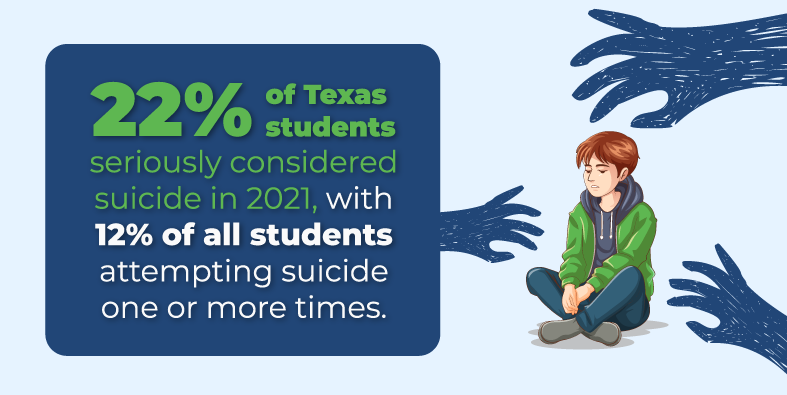
If your child is part of those statistics, it’s terrifying. Even if they’re getting treatment, the fear of losing them never really leaves you. It’s every parent’s worst nightmare.
Thankfully, these feelings are not permanent. Your child may not see a healthy solution to their pain yet, but at Bricolage Behavioral Health, we have strategies they can use to build a future they’ll look forward to. We’d love to share them.
Most people experience fleeting thoughts of suicide from time to time. The majority can dismiss them as exactly that: random, passing thoughts.
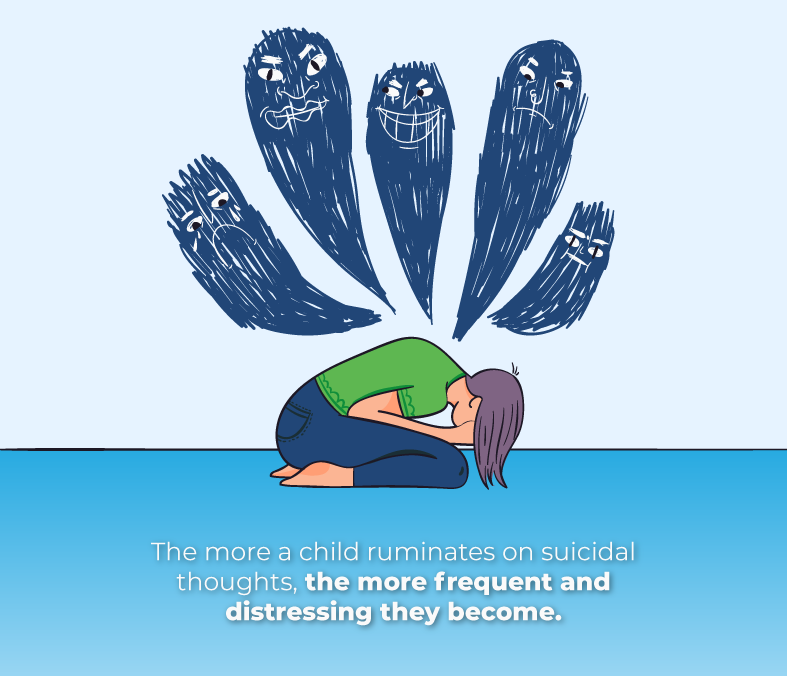
For some, however, suicidal thoughts (also known as ideation), no matter how brief, can be very alarming. This is especially true for kids. Thoughts with stronger emotions stick with us longer – they have a greater impact on our brains. These thoughts are also reinforced and strengthened the more we think about them and fixate on them, in a process known as rumination. The more a child ruminates on suicidal thoughts, the more frequent and distressing they become. Eventually, these thoughts feel less like thoughts and more like a solution, especially when the child experiences something painful or stressful.
Suicidal ideation is invasive and persistent for the people who live with it. It can be debilitating and, as we know, life-threatening.
We lost an estimated 560 young people to suicide in Texas last year alone. That’s one completed suicide every 15 hours. It’s a tragedy, and it’s preventable – especially with treatment.
When a child comes to us with suicidal ideation or following a suicide attempt, our first order of business is ensuring they have a safety plan in place.
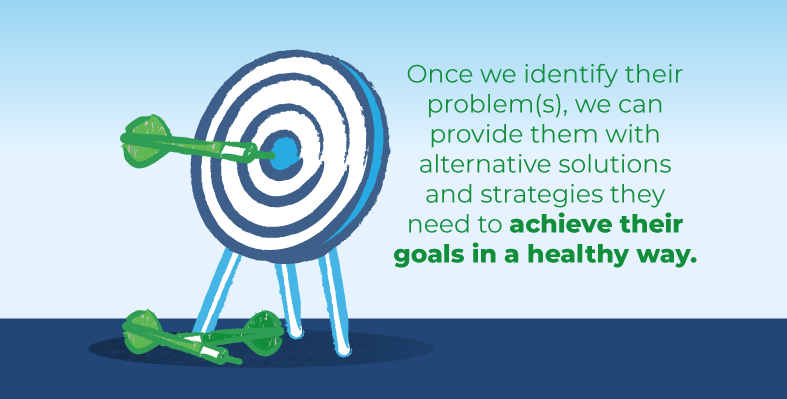
After that, we get to the bottom of why they’re considering suicide. People experiencing suicidal thoughts rarely truly want to die. They just see death as their most promising solution to a problem they can’t figure out on their own. Once we identify their problem(s), we can provide them with alternative solutions and strategies they need to achieve their goals in a healthy way. We have to gain the kids’ trust for this, and we ask them questions until we have a fuller picture of their circumstances, motivations, and mindset. We usually ask them if there are any certain times, places, or people that trigger their suicidal thoughts, how they cope with them, and what’s happened in their life to contribute to them.
Then, we utilize cognitive processing therapy (CPT) and dialectical behavioral therapy (DBT). We also consider every contributing aspect of the teen’s life and equip them with skills to manage them, even if they fall outside of standard CPT or DBT territory.
A safety plan is a personal guide teens can use when they have a bad mental health day and start considering suicide. On a good day, the contents of the safety plan might seem straightforward and easy to remember, but during a downward spiral, these reminders and strategies are necessary.
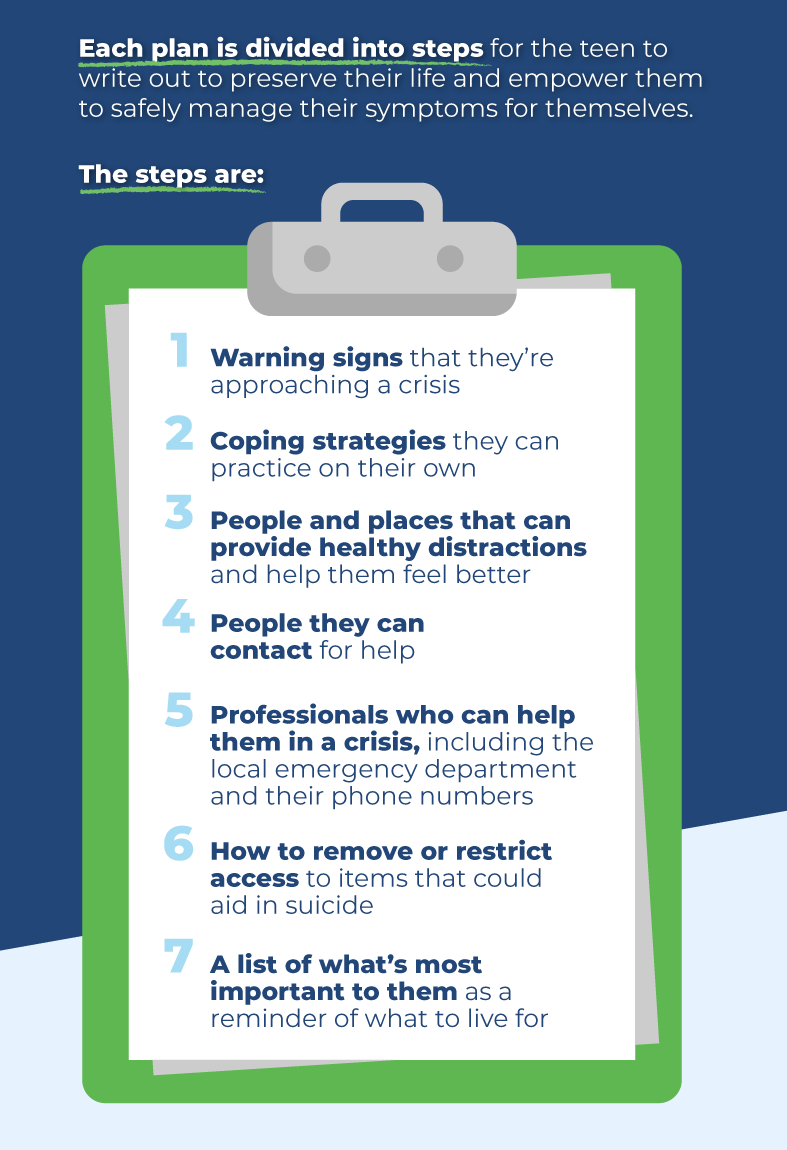
Each plan is divided into steps for the teen to write out to preserve their life and empower them to safely manage their symptoms for themselves. The steps are:
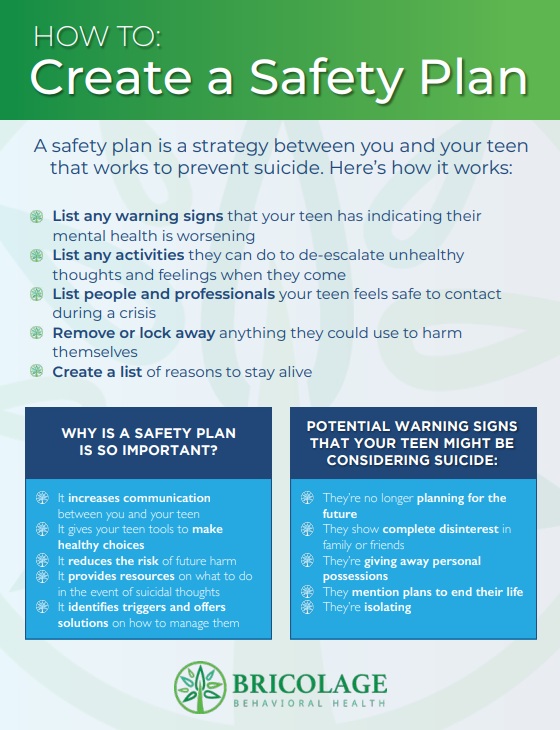
This safety plan can be updated and edited anytime because situations and priorities change! Anyone, whether they regularly live with suicidal ideation or not, can create a safety plan. You never know when it might be helpful.
You can download our Safety Plan by clicking on the image below, then right clicking and saving.
Exactly the kind of therapy a child undergoes depends on the motivation behind their thoughts, but CPT and DBT are major components of our typical treatment for suicidality.

CPT focuses on identifying and restructuring harmful thought patterns. We’ll also frequently roleplay scenarios to practice skills the kids learn in therapy, both in family and group sessions. Once we identify a triggering situation for the teen, we might ask them to imagine themselves in a similar situation and try practicing the thought-restructuring techniques they learned – and it does take a lot of practice. Replacing suicidal thoughts with life-affirming ones will feel unnatural and insincere at first, but the more teens “go through the motions,” the more their brains will accept the change.
We also encourage all of our kids to focus on solutions instead of problems – another CPT strategy – which can be a game-changer for young people with suicidal ideation. Fixating on problems creates a downward spiral, but shifting gears to solutions promotes less destructive thinking and potentially fixing concerns in the kids’ lives.
We primarily use DBT for its emotional regulation and stress management techniques. DBT emphasizes pausing and processing a situation before reacting, which is vital for those with suicidality to calm themselves down and resist the impulse for destructive or impulsive behavior..
Everyone’s reason for suicidal thoughts is different, but it ultimately boils down to some kind of pain they can’t manage healthily. Sometimes, this pain is obvious to people around them, but it’s frequently more subtle.
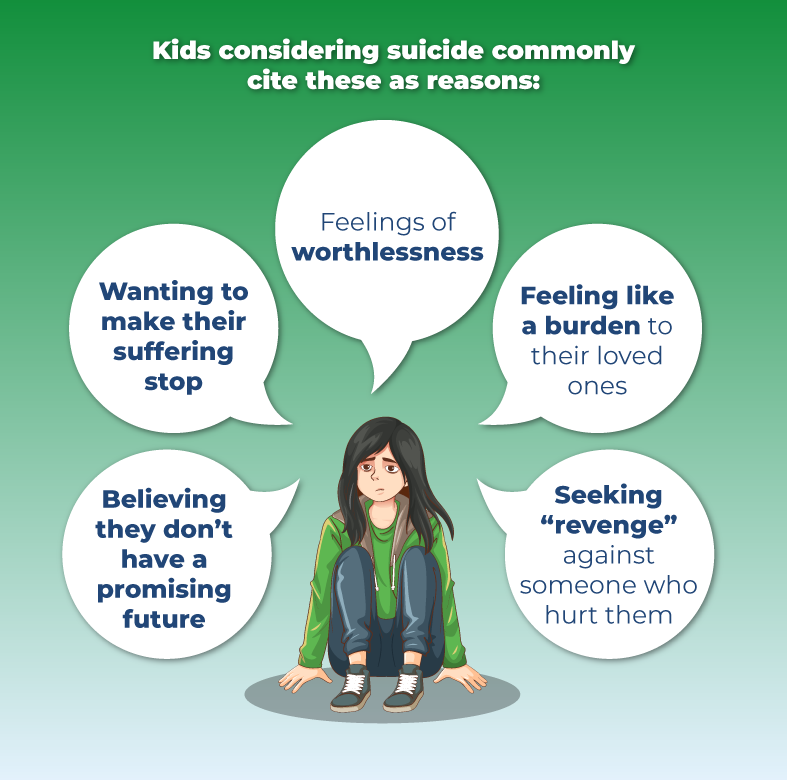
As we’ve worked with kids through the years, we’ve noticed some patterns in motivation behind suicidal ideation. Kids considering suicide commonly cite these as reasons:
Of course, there are other possible motivations, but most of them boil down to something on this list at their core.
Your child considering or attempting suicide can be shocking and confusing. Keep in mind that they are growing, and the world is opening up to them. They are always experiencing new things, and they don’t tell you about all of them. They also don’t always have the skills to handle unpleasant situations properly. Teens can also be stubborn, and as they become more independent, they refuse to ask others for help when they need it. After all, at that age, teens are very concerned about being “cool.” While mental health conditions are less stigmatized now than ever before, most kids still aren’t eager to admit they’re having a hard time. They also often don’t want to worry or inconvenience the people around them.
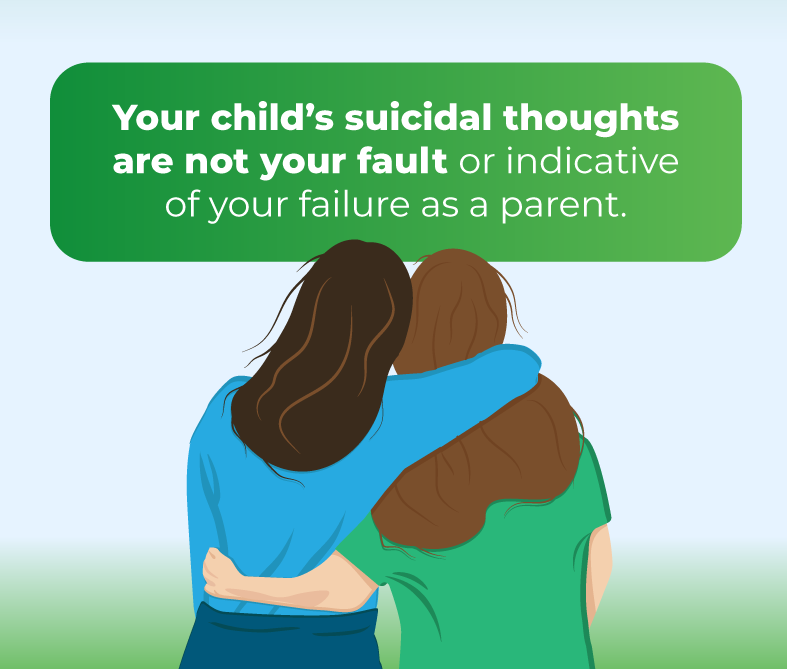
Your child’s suicidal thoughts are not your fault or indicative of your efforts as a parent. You’re here reading this page, which is a good first step. Now it’s time to seek help.
When a child is contemplating or has attempted suicide, they have more options than they know. There are safe ways for them to find relief from their pain. Healing does take work, and overcoming negative thought patterns and habits isn’t easy, but Bricolage will walk alongside your family every step of the way.
At Bricolage, we will work with your child and family to reduce and eliminate thoughts of self-harm. We won’t stop there, though – we want them to thrive. The situation may feel hopeless now, but it’s not. We’ll shine a light on your child’s strengths and empower them to build a future that makes you – but even more importantly, them – proud.

While we work hard to make sure all of our treatment is a cut above the rest, where Bricolage Behavioral Health really shines is with our whole-group therapy. We’ve pioneered group therapy that engages every child through the entirety of the session, as opposed to going around a circle and speaking one at a time like traditional group therapy. We have group discussions and teach through multimedia. Kids work with partners and in small groups, and most importantly, practice how to apply the skills they learn in therapy to their regular lives. Any child managing mental health symptoms can benefit from Bricolage’s group therapy – and our treatment as a whole. Contact us at 469-968-5700 to get started.
Bricolage Behavioral Health: Where Teen Minds Matter

Bricolage Behavioral Health is strength-based, skills-based, evidence-based, and medication-light. We empower your child or teen to develop the skills they need to take control of their mental health with effective, science-backed therapy.
At Bricolage Behavioral Health we believe that whole family healing affords your child the best chance for long term mental health and can put your loved ones on the path to a healthier, happier life.
Bricolage Behavioral Health
3204 Long Prairie Road
Suite A
Flower Mound, TX 75022
Mon - Fri: 8:30 AM–9:00 PM
Sat & Sun: 9:00 AM–5:00 PM