Contrary to popular belief, psychological disorders are not caused by defective genes, neurochemical imbalances, or faulty wiring. (Note on a common point of confusion: This is different from autism, which is often the result of chromosomal abnormalities that affect brain development and function.) Of course, all of these factors play a role in behavior and thought, but they are not deterministically causal. That certainly sounds confusing, but we’ll explain.
Prefer to listen instead? Here's a podcast on this same topic.
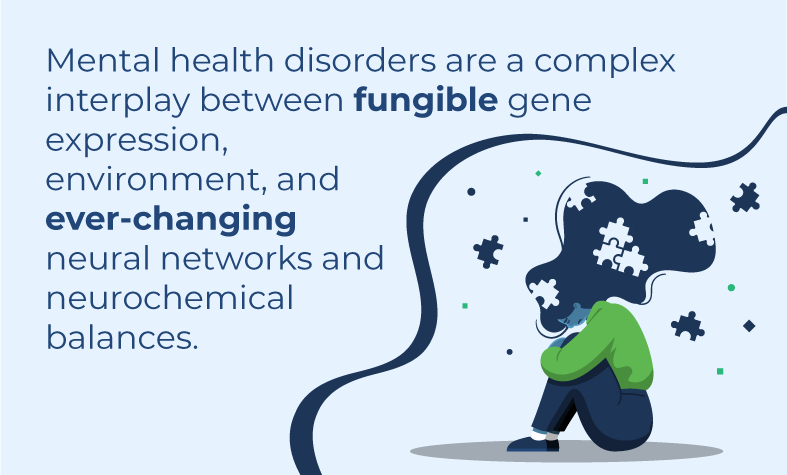
All of this can be very confusing for parents because the biological causes listed above are often implied to be the primary factors in their child’s problematic behavior. Sometimes, this is simple shorthand. Mental health disorders are a complex interplay between fungible gene expression, environment, and ever-changing neural networks and neurochemical balances. The reality is that science is currently only beginning to understand how this works. For this reason, as an example, many professionals will oversimplify and state that the aim of medication is to restore healthy neurochemical balances, even though that is far from accurate (in fact, we know it’s quite false as this article in Molecular Psychiatry explains regarding depression or this one from the Anxiety Center regarding anxiety explains).
In this article, we’ll take a look at the physiological and neurological processes that lead to both disordered behavior and recovery from it.
If you read the news headlines, it would be easy to come to the false conclusion that some kind of faulty gene or genes is somehow responsible for your child’s disorder. However, no gene or polygenic array (group of genes) has ever been found to determine any disorder as identified in the Diagnostic & Statistics Manual or DSM (the go-to resource for classifying mental health disorders in the US).
This may come as a surprise as you have certainly encountered numerous headlines in newspapers and magazines over the years claiming that researchers have found the gene or genes for addiction, depression, ADHD, or some other disorder. Unfortunately, these articles are inevitably written by journalists with little to no understanding of the science, and headlines tend to be overly bold and misleading.
It is true that, on occasion, some research papers have come out claiming to have identified a gene or genes for a disorder. However, these studies have never been replicable. Inevitably, it’s found that the study design was poor, data was misinterpreted or misrepresented, and future replications of the study failed to find the same result. Of course, the media does not update their original story with these facts, so the average person is often left with the impression that such findings are accurate. If any of these stories were accurate, then we would diagnose mental conditions with physical tests no psychosocial evaluations.
Often, the average person’s understanding of genetic expression is rooted in Mendelian heritability, which is learned in middle or high school biology class. This works when we’re looking at very simple genetic expressions, such as the color of peas, which rely on what’s called a single nucleotide polymorphism (SNP) determining a physical characteristic. What most people don’t know, because it’s not taught until more advanced Biology classes in college that few of us take, is that most of Mendel’s experiments were unable to show such simple transference even though he spent decades trying to replicate his results with other characteristics. Most biology classes only focus on the small number of examples of SNPs that he identified since they get the basic idea of genetic inheritance across.
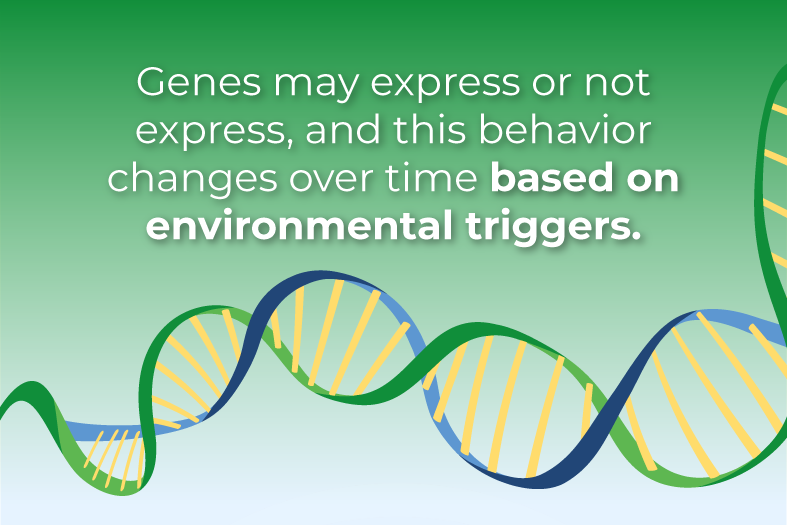
For most characteristics, genetic expression is often a complex interplay between the environment and many, many genes. Genetic expression is also often not stable, which most people don’t realize. Genes may express or not express, and this behavior changes over time based on environmental triggers. In this way, genes are often not deterministic but help the organism adapt to the needs of its environment. There is also the somewhat newer science of epigenetics, which incorporates new gene adaptations as a result of environmental stimuli that are then passed down to children. Epigenetics is a complex topic we won’t get into here. We simply need to understand that environmental stimuli can and do change gene structure and expression over the course of a person’s life, reinforcing the point that genes are often not deterministic.
Another point of confusion is the difference between simple physical characteristics and the overwhelming complexity of the literal billions of neurons that make up our brains. When we look at our eyes or our hair color, that’s pretty set for life (though most of us do know examples of someone with eye or hair color that changed at some point in their life, an example of environmental stimuli affecting genetic expression at a later point in life). We then make the false assumption that this could apply to something as complex as human behavior.
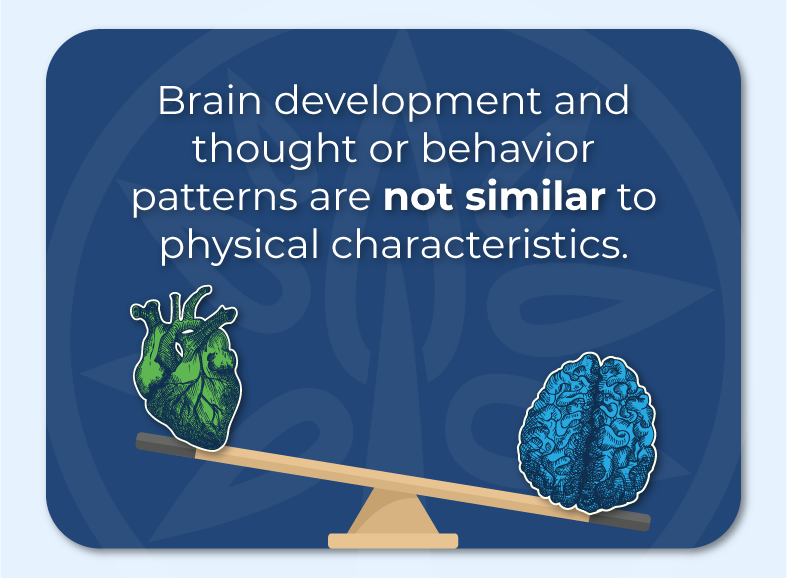
Brain development and thought or behavior patterns are not similar to physical characteristics. One of the main reasons for this is that our brains change constantly, a trait referred to as neuroplasticity. This is how we learn. Our brains have very limited hardwiring. Most of it is like software. And just like software in a computer, it can be overwritten, rewritten, added to, deleted, etc. Think of it like math class. No human is born with mathematical concepts. In fact, even something as basic as numbers and counting is not inherent to human knowledge as the Piraha Tribe in the Amazon demonstrates – they have no numbers in their language, cannot count, and do not understand most concepts of basic arithmetic as a result.
In America, as we learn more about math, our brain builds the neural pathways and the software to record and understand it. We are also constantly updating our knowledge and skills. Can you think of an example where you learned a math concept wrong? Certainly, you can. Well, it would be terrible if our brains had no way to update the wrong information. Imagine thinking 2+2=5, and then you think that forever because you first learned it wrong. Of course, our brains have a mechanism called memory reconsolidation that allows us to update and correct wrong information.
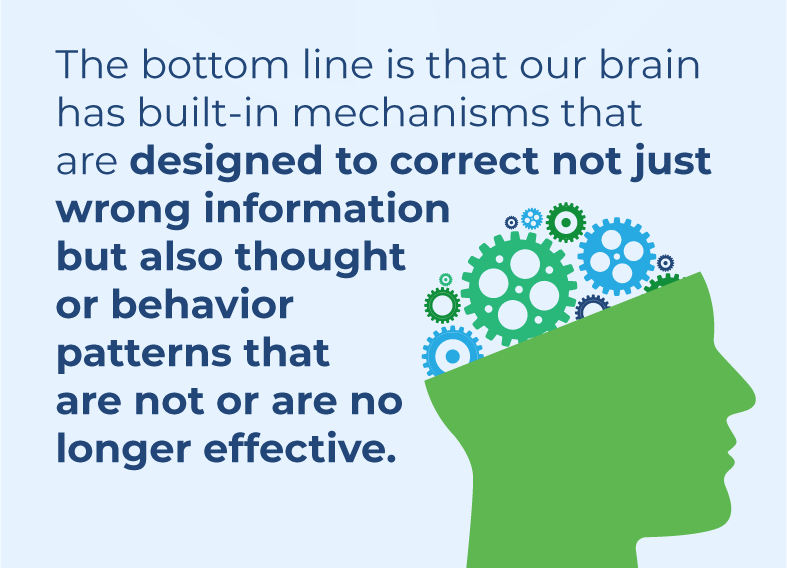
This is not just for information but for skills and behaviors as well. When we first start learning to ride a bike, we do it wrong. We have to keep updating our skills until we lock in the right movements. Maybe you know someone who often got angry easily in the past, which caused problems in their life, so they learned to control that anger and behave differently. Or you know someone who was often anxious because they were overly focused on the worst-case scenario in any situation but then began to think more positively and overcame that anxiety. And we all know someone who has overcome a fear at some point in their lives. The bottom line is that our brain has built-in mechanisms that are designed to correct not just wrong information but also thought or behavior patterns that are not or are no longer effective.
Of course, our genes have some kind of influence on us. Our genes, like the neurochemicals in our brain, are always influencing us in complex and often subtle ways. It’s not that genes don’t have an effect; they obviously do, but these effects are not deterministic when it comes to behavior. Think of it like someone born with a family history of lung cancer. Let’s say they have a 6% risk of getting lung cancer compared to the average person’s risk of only 3%. Will they get lung cancer?
We don’t know. However, the probability is quite small, even though they have a heightened risk versus the general populace. This is how all genetic influence works for genes that do have direct influence. When it comes to mental health, there are no genes that have a clear, direct impact (at least that have been discovered to date, but discovery is unlikely given that we’ve already mapped the entire human genome and spent billions of dollars trying to find such genes already to no effect).
In this way, genetic influence on behavior is never deterministic. It is always probabilistic. Sticking with our cancer example, are there ways to mitigate the risk of cancer? Of course! We can exercise, avoid smoking, stay away from other carcinogens, etc. All these actions reduce our risk. If we get lung cancer, does this mean that’s the end? Again, of course not. We have many treatments available that can hopefully eliminate or push the cancer into remission.
This is the exact same way our mental health works. There are many things we can do to prevent mental health problems, improve them, or find full recovery if we do develop them. This is the goal of therapy, after all, and we see it work every single day. Kids who come into our program leave much better than they started because effective therapeutic intervention leads to reduction or, hopefully, elimination of symptoms.
Finally, when it comes to something like the subtle but pervasive influence of genetic expression, this is something we do not have control over. While we can influence our genes’ expression based on environmental stimuli, we are not able to change the genes we were born with. For this reason, there is little therapeutic value in overly focusing on any impact our genes may or may not have on our behavior.
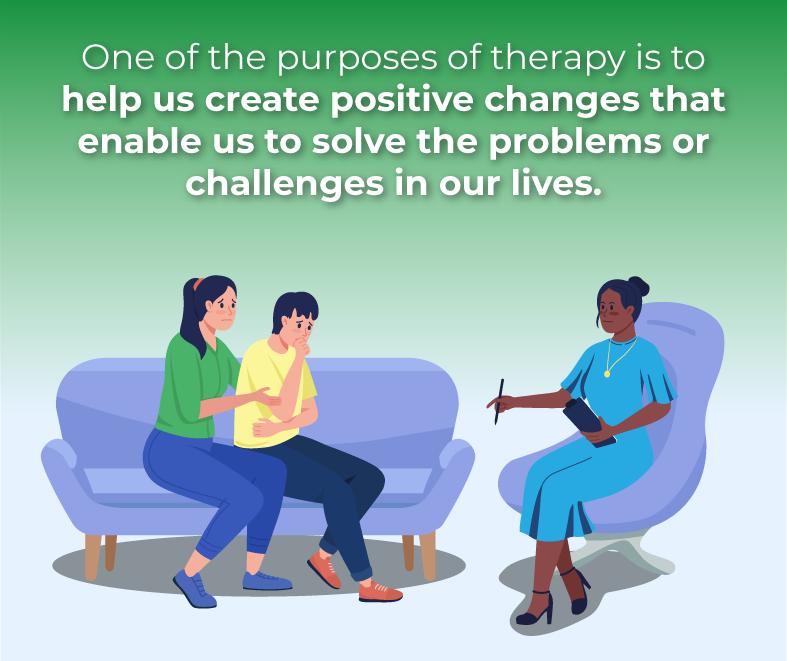
Instead, we want to focus on what we can control, which is our thoughts and behaviors. Our thoughts and behaviors change all the time. One of the purposes of therapy is to help us create positive changes that enable us to solve the problems or challenges in our lives.
We’ll start off by saying there is no “correct” amount of neurochemicals in the brain. Neurochemicals in the brain operate in what is called an “open system.” This means that, rather than specific amounts of this or that neurochemical, the brain operates off of equilibrium ranges. These equilibrium ranges, or stasis points, are also not static. They change over time as our brains adapt to different conditions in our lives.
Certain situations may require high levels of dopamine, while other situations may require low ones, for example. It may surprise you to hear that 90% of all serotonin in our bodies is used in our gastrointestinal tract to regulate the functions of our intestines. Only a small portion is used in the brain, and we think the brain uses it to help regulate mood. But, as this article in Chemistry World from January of 2024 points out, we still don’t really know how SSRIs, drugs like Prozac, Paxil, and Zoloft, really work. While they seem to work well for a subset of people, in around 70% of people, they barely have an effect above placebo and can increase the risk of suicide, among other side effects, especially in children, so must be used with care.
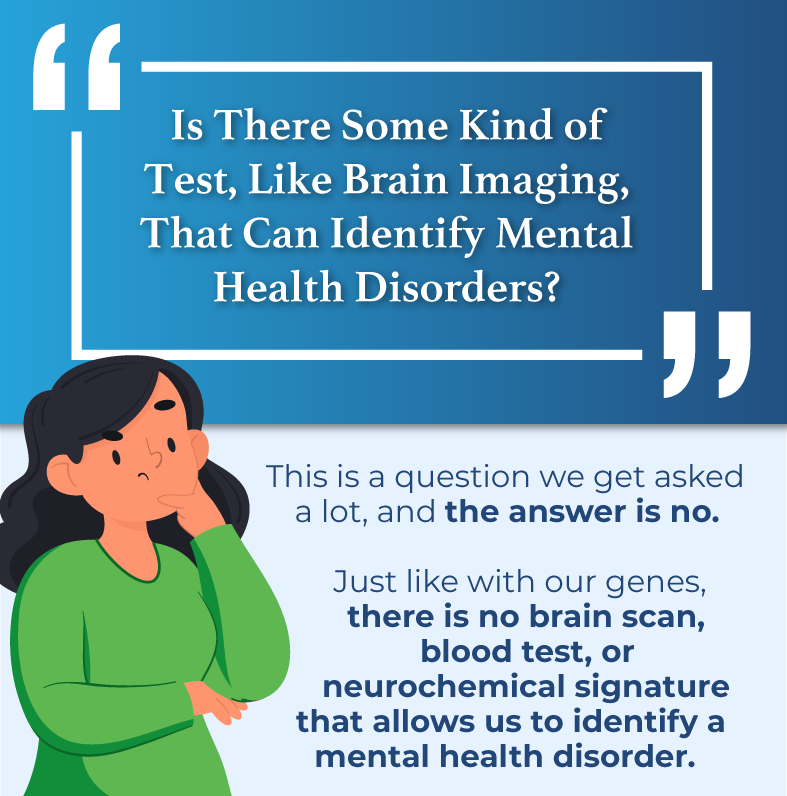
This is a question we get asked a lot, and the answer is no. Just like with our genes, there is no brain scan, blood test, or neurochemical signature that allows us to identify a mental health disorder. This is why the DSM uses symptom clusters rather than any kind of physical test to diagnose patients.
You may say, “Well, I’ve definitely heard of brain scans like fMRIs being used to identify ADHD or other disorders.” Unfortunately, similar to the situation we mentioned with newspaper reporting and genetics, this is not the case. To further confuse the matter, sometimes individual doctors or clinics will claim that they use brain scans to help them assess and treat mental health disorders, implying that such scans give a clear picture for diagnosis.
On the contrary, none of these methods have held up to strict academic scrutiny. Instead, it is more of a sales tactic than factual science.
The fact is that our brains are highly individualized since our neural pathways and various neurochemical balances are products of our lived experience, which is unique to us all. While we sometimes find similarities between small groups of people, these similarities are not evident consistently across large sample sizes in the research.
In their article The Chemical Imbalance Theory Is False, Jim and Marilyn Folk state:
“MRI and fMRI scans can only confirm electrical activity, blood flow, and oxygen utilization in the brain. They can’t, by themselves, determine what is causal and what is effect. Those conclusions require interpretation. While these technologies can see patterns, they DO NOT test for neurotransmitter levels.
As Dr. Burns states, ‘If you’re feeling sad, your brain may show one pattern; if you’re feeling happy or excited, it may show another.’
Yes, MRI and fMRI technologies can be helpful in the diagnostic process for some medical conditions, but they CANNOT determine why anxiety and depressive disorders occur. It’s not within their capability.”
It’s also important to remember here that brain change does not equal brain damage. Just because we see difference or change, this does not mean the brain is malfunctioning.
We must also keep in mind that our brains are changing every second of every day. Our brains are constantly building new connections and pathways, strengthening heavily used ones, and pruning away things we no longer need. Often, what we see in an fMRI is not the reason why we behave the way we do but an example of the way our brain has developed based on our unique life experiences. As we learn to think and behave in certain ways, brain scan technology can show us the areas of our brain we are using. Our brains weren’t always that way but developed that way over time. As someone learns math or how to play an instrument, we will see new activity in the brain just as we will when we develop anxiety over social situations or have regular suicidal ideation. Our brains change in an interactive feedback loop between external stimuli and how we internally react to or think about those stimuli.
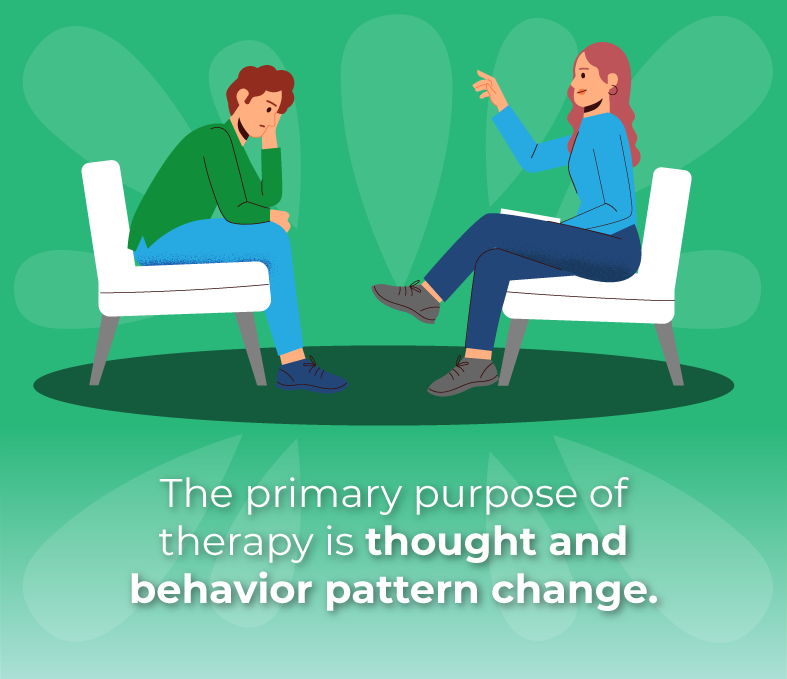
The primary purpose of therapy is thought and behavior pattern change. Children need to learn the skills to be successful in life, which means addressing the underlying causes of their disorder.
Think about the last time you were angry or sad. Why were you angry or sad? Maybe a friend said something behind your back, or a co-worker wasn’t carrying their weight on a project, which affected your team’s ability to deliver.
We have feelings as a result of changes in our environment. We don’t become angry or sad for no reason. The same is true of more intense feelings such as depression, anxiety, or compulsions. Perhaps my grandmother, who I was very close to, passed away last year. This started us on a cycle of intense sadness that led to not getting up in the mornings, which led to not taking care of personal hygiene and skipping classes. As we spiral down into more and more intense feelings of sadness, we eventually get diagnosed with clinical depression.
Or perhaps our father suddenly passes away from a sudden bacteria-related illness. We begin to develop a very strong interest in all the bacteria that exist and enter our bodies every day. As we start to think about it more and more, it becomes an obsession, an intense fear. We start avoiding people as they are full of germs, we obsessively wash our hands, and we constantly have intrusive thoughts of all the bacteria around us. Before you know it, we’ve been diagnosed with OCD.
In school, we’re insanely bored. Maybe we’re really smart, or maybe our teacher is just really boring. Either way, we begin to distract ourselves with daydreams, the squirrel searching for nuts outside the window or doodles on our paper. Each day, as we're increasingly bored, we engage in more and more self-distraction to entertain ourselves. Over time, the neural pathways in our brains crystalize, becoming our norm. Even in situations where we used to be more focused, we’re so used to spending 6 hours a day in school distracting ourselves that this behavior bleeds into our lives outside of school. Not long after, we’re diagnosed with ADHD.
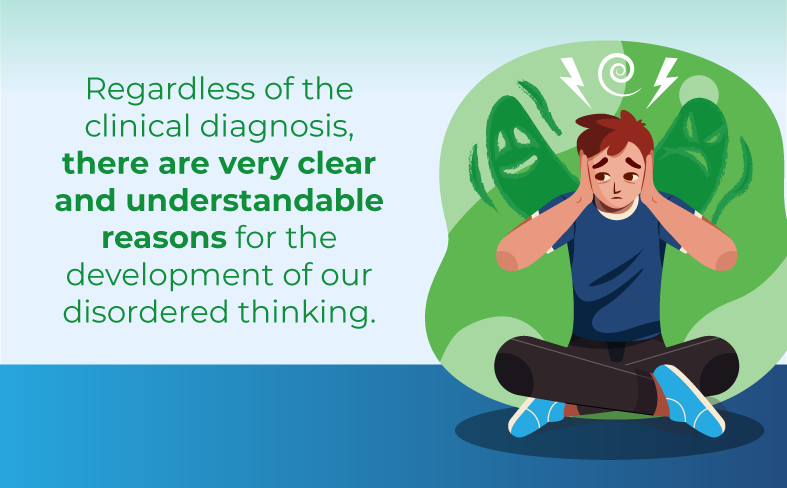
Regardless of the clinical diagnosis, there are very clear and understandable reasons for the development of our "disordered" thinking. In this way, we can say it’s incorrect to call it disordered as it develops for very logical and understandable reasons.
What we need to do in therapy is reverse or course correct the habituated thought and behavior patterns that are now causing our children problems. Instead of wallowing in our grief, we need to start taking action to get out and about to focus on the positive things in our lives. Instead of worrying about all the bacteria around us every day, we need to start focusing on all the people and ourselves who are strong and healthy regardless of all these bacteria. Instead of constant self-distraction, we need to both find environments that are interesting to us and engage in activities that promote concentration and focus.
In addition to addressing thought and behavior pattern change, we also want to build skills around behaviors. If our child is depressed all the time, we want to teach them emotional regulation skills that help them recognize negative thought spirals and get them thinking in a different direction. For ADHD, we can provide them with skills around executive function, focus, concentration, and being comfortable with sometimes being bored. We can also provide them with the communication skills to talk to their teacher about offering alternative activities that may be more engaging for them.
It is the building of these skills that ultimately allows our children to be successful in life and fully recover from the thought patterns and behaviors that led to their current mental health diagnosis.
Of course, medication can be a support in all of this as well. By flooding the brain with various chemicals, we can artificially stimulate certain states of mind, such as lighter moods or better concentration. These are not permanent solutions since, as we’ve seen, we need the neural wiring in place to support long-term behavioral change, but medications can be a great catalyst or support on one’s therapeutic journey.
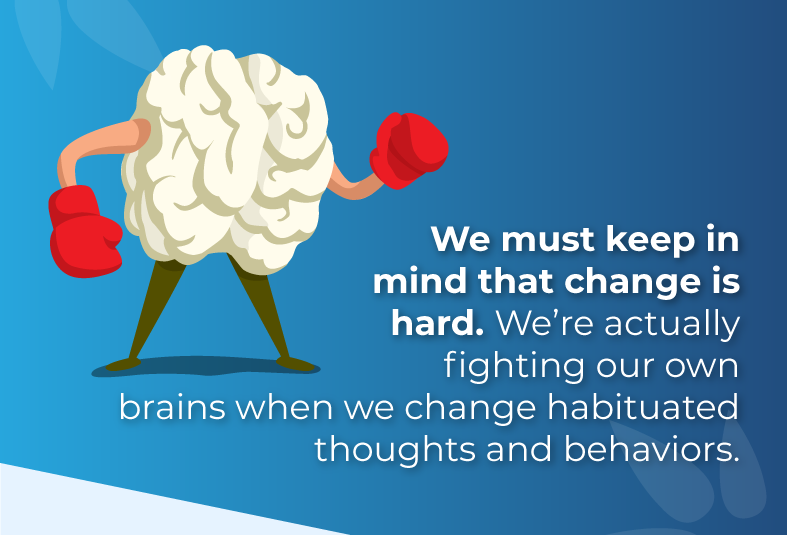
We must keep in mind that change is hard. We’re actually fighting our own brains when we change habituated thoughts and behaviors. Imagine someone telling you to change your religion or political affiliation overnight or a bad habit like nail biting or the way you walk.
In one night? Good luck! Most of us would take months to make such changes, even if we wanted to. The fact is that change is hard, which is why most of us don’t like it. There are entire courses on change management in leadership because most people are so resistant to large changes.
Our kids feel the same way. Change feels uncomfortable. It feels unnatural. Our brains are so used to thinking and behaving one way that changing those patterns creates friction from all the effort. Our brains, while only taking up a small portion of our total body weight, use a full 20% of our daily energy expenditure!
Understandably, our brain's goal is to minimize, not increase, the amount of energy we expend on it, which is one reason why we prefer to use existing pathways rather than put in the hard work of creating new ones. Until we develop a new, habituated set of thoughts and behaviors, we’ll actually feel worse during the beginning of the change process.
This is why our children struggle and even resist the change process. This is why, most of the time, things will get worse before they get better. At first, change is taxing and stressful. It’s often repeated that instilling a new habit takes around 30 days. The fact of the matter is that stabilizing big changes often takes longer than that. 30 days is just the first hump we have to overcome before things begin to feel a bit easier.
This is one reason why, in therapy, we focus on both incremental wins and long-term goals. By celebrating successful small steps, it’s easier to see progress occurring while we keep our eyes on the long-term prize of sustained recovery. As your child progresses through therapy, this is one way you can help them as well. Celebrate the small wins and remind them of the long-term goals. We do the same in our groups.

Here at Bricolage Behavioral, we specialize in empowering children and teens to create the thought and behavior pattern changes that allow them to overcome their mental health struggles and thrive. Give us a call at 469-968-5700.

Bricolage Behavioral Health is strength-based, skills-based, evidence-based, and medication-light. We empower your child or teen to develop the skills they need to take control of their mental health with effective, science-backed therapy.
At Bricolage Behavioral Health we believe that whole family healing affords your child the best chance for long term mental health and can put your loved ones on the path to a healthier, happier life.
Bricolage Behavioral Health
3204 Long Prairie Road
Suite A
Flower Mound, TX 75022
Mon - Fri: 8:30 AM–9:00 PM
Sat & Sun: 9:00 AM–5:00 PM